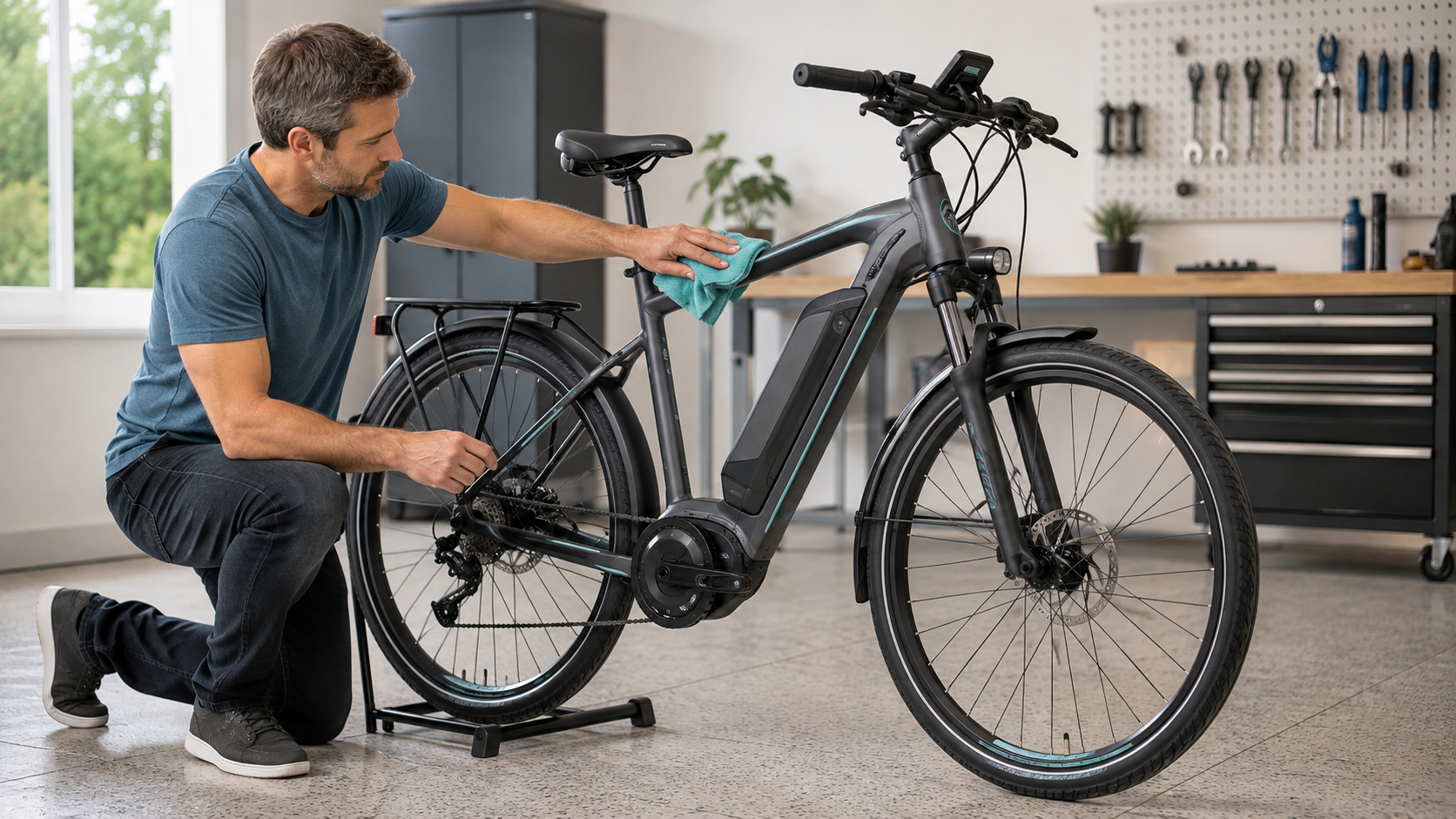
How to clean an eBike safely is not difficult, but the process should not be treated exactly like washing a regular bicycle. The frame, wheels, chain, and gears can handle normal bike cleaning. The battery, motor, display, charging port, wiring, and electrical contacts need a more careful approach.
The safest general method is simple: turn the eBike off, follow its owner’s manual, remove detachable electronics when instructed, loosen dirt with a soft brush, and clean with a damp cloth or sponge instead of blasting the bike with water. Never use a pressure washer or steam cleaner. Dry the bike completely before reinstalling the battery, switching it on, or connecting the charger.
Table of Contents
ToggleHow to clean an eBike safely
Every eBike system is designed a little differently. Some manufacturers tell owners to remove the battery before washing, while others provide model-specific instructions for fixed or integrated components. Water-resistance ratings also vary. That is why the owner’s manual should overrule any generic cleaning guide—including this one.
For most riders, this eight-step process is a safe starting point:
- Switch the eBike off and disconnect the charger.
- Check the manual’s cleaning and battery-removal instructions.
- Remove the battery and display if they are detachable and the manufacturer instructs you to do so.
- Brush away loose dirt before adding moisture.
- Wash the frame and wheels with a damp sponge or cloth and a small amount of bike-safe cleaner.
- Clean the drivetrain separately, keeping degreaser and lubricant away from the brakes.
- Dry the bike, electrical contact areas, and charging-port cover thoroughly.
- Reinstall removed components only when everything is dry, then check the controls and brakes before riding.
That method takes a little longer than using a strong hose, but it gives you far more control over where the water and cleaner go.
What you need before you start
You do not need an expensive washing station. A basic kit is enough for routine cleaning:
- Two or more clean microfiber cloths
- A soft sponge
- Soft bike-cleaning brushes in different sizes
- A bucket of clean water
- Bike-safe cleaner
- Bicycle drivetrain degreaser
- Chain lubricant suited to your riding conditions
- A separate clean cloth for drying
Build a Basic eBike Cleaning Kit
As an Amazon Associate I earn from qualifying purchases.
Finish Line Mechanic Brush Set – 5 Piece Cleaning Set
Five purpose-specific brushes give you separate options for the frame, wheels, components, and confined areas instead of using one dirty brush everywhere.
Muc-Off Nano Tech Bike Cleaner
A bicycle-specific cleaner for routine frame and exterior-component washing. Follow the product directions and your eBike manual, and do not spray it directly onto brake rotors, pads, or electrical contacts.
HOMEXCEL 12PK Microfiber Cleaning Cloth – 11.5 × 11.5 in., Assorted Colors
The assorted colors make it easier to reserve different cloths for washing, drying, and drivetrain work so oily residue does not reach the brakes.
Finish Line Pro Chain Cleaner Kit with Degreaser and Chain Lubricant
This combined kit provides a controlled way to clean drivetrain grime and apply lubricant without turning the article into a multi-product chain-maintenance guide. Keep every cleaner and lubricant away from the braking surfaces.
If you are assembling a broader home toolkit, start with these basic eBike maintenance tools.
Keep drivetrain brushes and oily cloths separate from anything used near the brake rotors. One greasy cloth can contaminate a clean braking surface.
Avoid pressure washers, steam cleaners, stiff metal brushes, abrasive pads, and strong solvents. Do not spray polish, degreaser, or lubricant across the bike. Apply products to the correct brush or cloth so you can control where they land.
Step 1: Power down and prepare the electrical system
Turn the eBike off and unplug the charger from both the wall and the bike. Never clean an eBike while it is charging.
Close the charging-port cover. If the cover is damaged, loose, or missing, avoid using water near that area and arrange for the part to be repaired or replaced.
Remove the battery only if it is designed to be removed and you can do it according to the manual. Support it with both hands, place it on a clean, dry surface, and protect it from being dropped. If the battery or display is fixed in place, leave it installed and clean around it carefully. Do not try to disconnect internal wiring or pry open a housing.
This preparation is also a good time to look for cracks, swelling, corrosion, damaged seals, exposed wiring, or evidence that water has entered an electrical component. If you see any of those warning signs, stop. Do not charge or operate the bike until the manufacturer or a qualified eBike technician has advised you.
Step 2: Remove loose dirt before washing
Trying to scrub mud and grit immediately can drag abrasive particles across the paint and display. Let heavy mud soften or dry enough to lift away without force, depending on the surface and the manufacturer’s instructions.
Use a soft brush to loosen dirt from the frame, fork, wheel rims, tire tread, fenders, racks, and other non-electrical areas. Work from the cleaner upper parts of the bike toward the dirtier wheels and drivetrain.
Be gentle around cable entries, sensors, control buttons, the motor housing, battery mounts, and electrical connectors. The goal is to remove surface dirt, not push it farther into a seam.
Step 3: Wash the frame and wheels with controlled moisture
Add a small amount of bike-safe cleaner to a damp sponge or cloth. Wipe the frame in sections, rinsing the cloth frequently so trapped grit does not scratch the finish.
Use a soft brush around tire tread, spokes, rims, fenders, and hard-to-reach frame areas. Keep the amount of water modest. If your manual permits a garden hose, use only a gentle, low-pressure flow and do not aim it directly at the battery area, motor, display, charging port, bearings, cable entries, or electrical connections.
The broadly compatible choice is still a damp cloth or sponge. An eBike being water-resistant does not make it pressure-washer-resistant. High-pressure water can be driven past seals and into areas that ordinary rain may never reach.
Step 4: Clean the drivetrain without contaminating the brakes
The chain, chainring, cassette, derailleur pulleys, and surrounding area collect oil and road grit. Clean these parts separately from the electrical system.
With the eBike switched off, apply bicycle drivetrain degreaser to a dedicated brush or cloth rather than spraying it across the bike. Work it into the dirty drivetrain surfaces while keeping your fingers clear of the chainring and gears. If you rotate the cranks by hand, do it slowly and deliberately.
Keep degreaser away from the motor housing, electrical connectors, tire tread, brake rotors, brake pads, and calipers. Do the same with chain lubricant. Contaminated disc brakes may become noisy or lose stopping performance.
After the drivetrain is clean, wipe away residue and let the chain dry. Apply the correct bicycle chain lubricant sparingly to the chain, then wipe off the excess. More lubricant is not better; excess oil attracts dirt and can migrate toward the braking surfaces.
This article covers the cleaning routine rather than complete drivetrain servicing. Chain wear, shifting adjustment, and component replacement belong in the deeper drivetrain-maintenance guide.
How to clean an eBike battery safely
Treat the battery as a sealed electrical component, not a part to scrub or soak. Use a dry or slightly damp soft cloth on the outside of the casing. Do not spray water or cleaner directly onto it, immerse it, open it, or insert anything into its ports or seams.
If the battery is removable, inspect the casing, rails, latch, and visible contact area. Brush away loose debris gently. Keep the contacts dry, and do not apply grease or another product unless the manufacturer’s instructions specifically call for it.
Before reinstalling the battery, make sure the battery, mount, contacts, and surrounding area are fully dry. The battery should seat and latch normally without being forced.
Water exposure deserves calm but serious attention. A 2025 CPSC warning about specific Rad Power Bikes batteries noted an increased fire hazard when the affected battery or harness had been exposed to water and debris. That warning applies to the listed battery models, not every eBike battery.
How to clean an eBike motor without damaging it
An eBike motor is normally a sealed unit. Owner cleaning should stop at the outside of the housing.
Use a soft brush to lift dirt from around the motor area, then wipe the housing with a damp cloth. Do not direct a hose at the motor seals, use compressed air to drive debris into openings, or remove the motor cover to clean inside. Avoid soaking the area where wiring enters the motor.
If you hear a new grinding sound, see damaged wiring, find a loose motor mount, or notice repeated power loss after cleaning, do not open the motor. Have the bike inspected by a qualified eBike technician.
How to clean an eBike display and controls
Use a clean microfiber cloth that is dry or only slightly damp. Wipe the screen gently instead of scrubbing it. Do not spray cleaner directly onto the display, and avoid strong household glass cleaners or solvents that could damage coatings, plastics, seals, or printed labels.
Pay attention around buttons and the edge of the display, where excess liquid could be pushed into a seam. If the display is removable and the manual tells you to remove it for cleaning, clean it away from the wet work area and reinstall it only after the mount is dry.
Dry the eBike before turning it back on
Use a clean cloth to dry the frame, wheels, motor exterior, display, battery mount, charging-port cover, and other damp areas. Let the bike air-dry in a sheltered, ventilated place. Do not use a high-heat dryer on the battery or electronics.
Look again for moisture around the charging port, battery contacts, display mount, cable entries, and seams. Reinstall the battery and removable display only when those areas are dry.
Before riding, switch the system on and confirm that the display, controls, lights, and pedal assist respond normally. Squeeze both brakes and make sure they feel firm and predictable. If braking performance has changed, do not ride until the cause has been corrected.
Once the bike is dry and responding normally, run a quick pre-ride safety check before heading out.
Cleaning mistakes that can damage an eBike
Most cleaning problems come from too much force, too much liquid, or the wrong product. Avoid these common mistakes:
- Using a pressure washer or steam cleaner
- Directing water at electrical contacts, ports, seals, bearings, the motor, or the display
- Assuming an IP or water-resistance rating makes every washing method safe
- Reinstalling or charging the battery while contacts are damp
- Spraying degreaser or lubricant near disc brakes
- Using the same brush or cloth on the drivetrain and brake surfaces
- Opening the battery, motor, display, or controller housing
- Ignoring corrosion, damaged wiring, cracks, swelling, unusual heat, or other warning signs
Cleaning should reveal problems, not create new ones. If something looks damaged, resist the temptation to “clean it until it works.”
How often should you clean an eBike?
There is no single schedule for every rider. Clean the bike when dirt, salt, mud, dust, or drivetrain buildup begins to collect. A fair-weather recreational rider may only need occasional wipe-downs. A daily commuter or trail rider may need attention after wet, muddy, dusty, or salted-road rides.
A quick wipe is often more useful than waiting for a major wash. Removing moisture and road grit promptly can keep them from sitting around fasteners, drivetrain parts, and electrical covers.
Cleaning does not replace inspection or service. Use it as a chance to notice tire damage, loose parts, brake changes, chain wear, damaged seals, or electrical warning signs.
For a broader maintenance rhythm, build cleaning into your eBike service schedule.
You can also place this process inside a complete beginner eBike maintenance routine.
Final takeaway
The best way to clean an eBike is controlled, not aggressive. Follow the model’s manual, switch the system off, keep pressure and excess water away from electronics, clean the drivetrain separately, and let every electrical area dry before power or charging returns.
You do not need to make the bike spotless. You need to remove the dirt that causes wear while protecting the components that make an eBike different from an ordinary bicycle. A soft brush, a damp cloth, the right cleaner, and a careful final inspection are usually all it takes.
Frequently asked questions
Can I wash an eBike with a garden hose?
Only if the manufacturer’s instructions allow it. Use a gentle, low-pressure flow and never aim water directly at the battery, motor, display, charging port, bearings, or electrical connections. A damp cloth or sponge is the safer general method.
Should I remove the eBike battery before cleaning?
Follow the manual for your model. Remove a detachable battery when the manufacturer instructs you to do so, but do not attempt to disconnect a fixed battery. Keep the battery, mount, and contacts dry and reinstall it only after the area is completely dry.
Can I use dish soap to clean an eBike?
A small amount of mild, diluted soap may be acceptable on some finishes, but a bike-safe cleaner is the more reliable choice. Avoid strong detergents, solvents, abrasive cleaners, and any product the manufacturer warns against.
How long should an eBike dry before I charge it?
There is no universal number of minutes. Do not connect the charger until the charging port, battery, contacts, and surrounding areas are fully dry. If you suspect water entered the battery or another electrical component, do not charge the bike; contact the manufacturer or a qualified eBike technician.