Switching to an eBike or eScooter can make daily travel feel easier almost overnight. You skip traffic, spend less on fuel, and turn a stressful commute into something much more practical. But once you rely on your ride every day, maintenance stops feeling optional. This article is apractical guide for eBike and eScooter Maintenance for Beginners.
That is the part many beginners do not expect.
An electric ride still has many of the same wear points as a regular bike or scooter. Tires lose pressure. Brakes wear down. Bolts loosen over time. On top of that, you also have a battery, wiring, sensors, and a controller working in the background. That combination can make upkeep feel more intimidating than it really is.
The good news is that most of the maintenance tasks that keep an eBike or eScooter safe and dependable are simple. You do not need to become a technician. You just need to know what you can handle yourself, what warning signs matter, and when it is smarter to let a professional step in.
This guide breaks that down in clear terms so new riders can protect their investment, avoid preventable problems, and feel more confident about everyday ownership.
A Simple Beginner Maintenance Schedule
A lot of new riders wait until something feels wrong before they think about maintenance. That is understandable, but it is not the best habit for an eBike or eScooter.
The better approach is to use a simple schedule. You do not need to inspect every part every day. You just need a rhythm that helps you catch small problems before they turn into expensive repairs or safety issues.
This guide covers both eBikes and eScooters, but many of the deeper maintenance articles in this series will focus on eBikes because they have more bicycle-style wear parts. Chains, gears, brake pads, tires, derailleurs, racks, fenders, and sometimes suspension all create more regular maintenance points.
Here is a beginner-friendly schedule you can use as a starting point.
Do not treat this schedule like a strict mechanical rule. A light weekend rider and a daily commuter do not put the same stress on their ride. If you ride in rain, carry cargo, use a heavy fat tire eBike, or commute on rough pavement, you should check things more often.
The goal is not to become obsessive. The goal is to build a simple habit that keeps your ride safe, predictable, and ready when you need it.
Why Maintenance Matters More Than Many Beginners Realize
With a traditional bike, small problems often build slowly. On an electric ride, they can affect safety, range, and reliability much faster.
A tire that is a little low on pressure does not just make the ride feel sluggish. It can reduce range, affect handling, and make the motor work harder. A loose bolt on a folding scooter stem is not just annoying. It can become a real safety issue if it keeps backing out. Dirty or worn brake parts also become more noticeable on electric rides because the extra speed and weight put more demand on stopping power.
For commuters, that matters. A neglected ride is not just a hobby problem. It can mean being late for work, missing appointments, or getting stranded on the way home.
That is why beginner maintenance is not about perfection. It is about keeping your ride safe, reliable, and ready for daily use.
The Three Areas That Matter Most
Most beginner maintenance comes down to three things: battery care, mechanical safety, and rolling efficiency.
Battery Care Protects the Most Expensive Part of Your Ride
Your battery is one of the most valuable parts of your eBike or eScooter. If it is treated well, it should give you steady performance for a long time. If it is neglected, you may notice weaker range, slower response, or earlier replacement costs.
Many new riders assume battery care is complicated, but the basics are simple. Avoid leaving the battery in extreme heat or freezing cold. Do not leave it fully drained for long periods, and always use the correct charger for your specific ride.
Pay attention if you notice sudden range drops, inconsistent charging, unusual heat, or performance that feels weaker than normal. Those signs do not always mean the battery is failing, but they do mean it is worth slowing down and taking a closer look.
Good battery habits are less about doing something technical and more about avoiding unnecessary stress. A little care goes a long way toward protecting performance, range, and long-term reliability.
Battery Safety Is Maintenance Too
Battery care is not only about getting more range. It is also about safety.
Most eBike and eScooter batteries work quietly in the background, so it is easy to forget how much energy they store. That is why battery maintenance should be treated differently from normal cleaning, tire pressure, or chain care.
Start with the charger. Use the charger that came with your ride or one approved by the manufacturer. Do not assume a charger is safe just because the plug fits. A wrong or low-quality charger can create problems that are much more serious than a slow charge.
You should also avoid charging a battery that looks damaged, smells unusual, becomes unusually hot, has been exposed to heavy water, or shows swelling, cracking, or other physical damage. Those are not “wait and see” problems. Stop using the battery and contact the manufacturer or a qualified shop.
Do not open the battery casing. Do not try to repair battery cells. Do not rebuild a battery pack from loose cells or used parts. Battery repair is not beginner maintenance.
Charging habits matter too. Charge in a safe, open area when possible. Keep the battery away from flammable materials, avoid covering the charger, and unplug the battery when charging is complete. For everyday riders, it is also smart to avoid making overnight charging your normal routine.
When you are buying a new eBike, replacement battery, or charger, look for signs that the electrical system has been tested by a recognized safety organization. For eBikes, UL 2849 is one important standard because it looks at the electrical system, battery, and charger together instead of treating each part as separate.
This does not mean every uncertified ride will fail or that every certified ride can be ignored. It simply means beginners should take battery quality, charger compatibility, and manufacturer support seriously.
A good rule is simple: if the battery looks wrong, smells wrong, charges wrong, or behaves differently than usual, stop using it until you know what is going on.
Mechanical Safety Keeps Small Issues From Becoming Bigger Ones
Electric rides create constant vibration. Over time, that vibration can slowly loosen hardware, especially around handlebars, stems, folding mechanisms, racks, fenders, and brake mounts.
That means part of maintenance is simply checking that your ride still feels solid. If you notice a new rattle, slight wobble, or shifting feeling in the bars or stem, do not ignore it. Those are often early warning signs that something needs tightening or closer inspection.
Tire Pressure Affects Comfort, Control, and Range
Tire pressure is one of the easiest things to ignore and one of the most important things to maintain.
Low pressure increases rolling resistance, which means the motor has to work harder to keep moving. That can drain the battery faster and make the ride feel less stable. On an eScooter especially, underinflated tires can also make potholes and rough pavement feel harsher than they should.
For many riders, keeping the tires properly inflated is one of the easiest ways to improve range and reduce flat risk. If you want to understand why that matters so much in daily use, see why tire pressure changes real-world eBike and eScooter range.
What You Can DIY With Confidence (eBike and eScooter Maintenance)
Most beginners can handle the regular maintenance that keeps an eBike or eScooter working well. You do not need a full workshop. A few basic tools and a simple routine are usually enough.
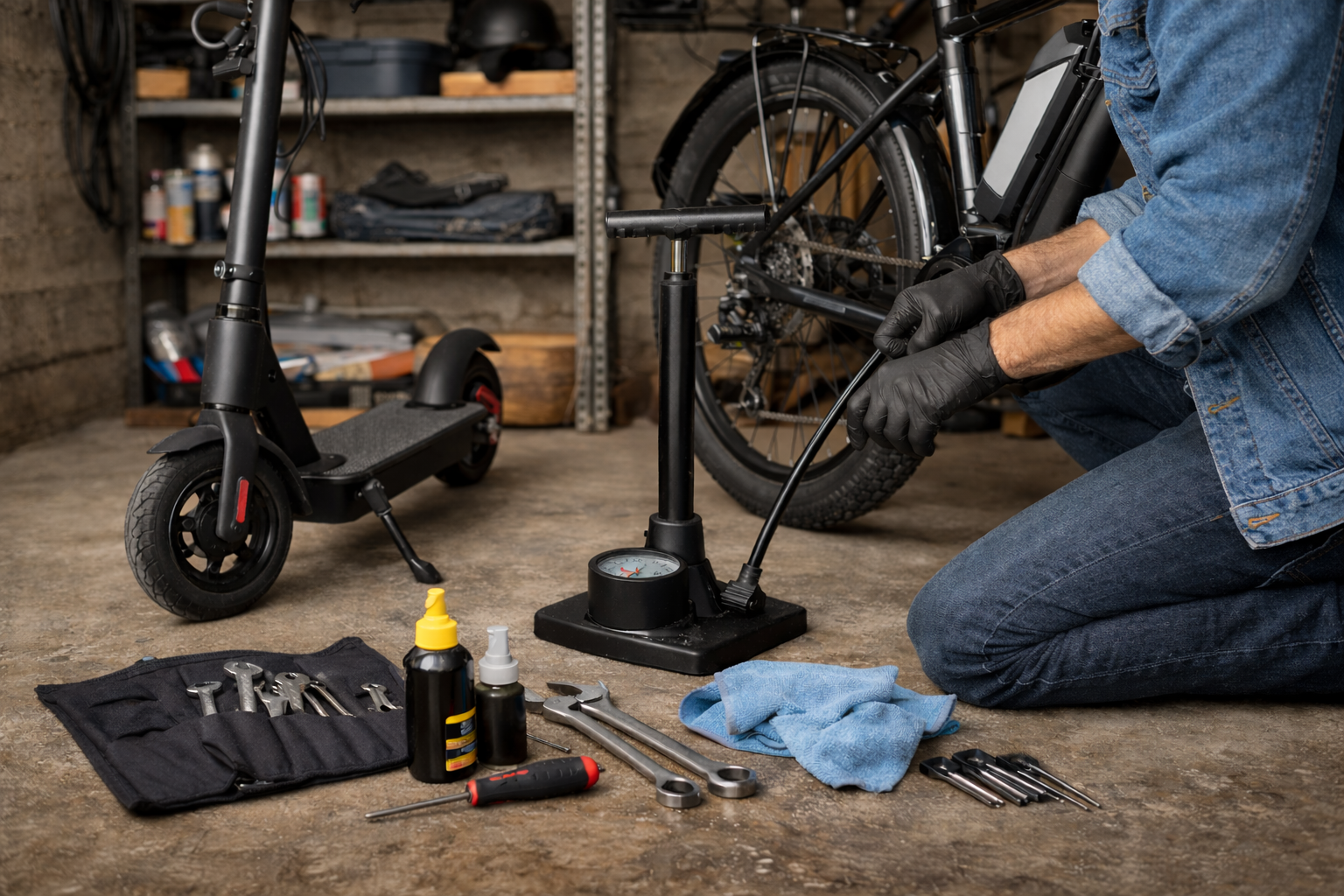
A good starter kit includes a floor pump with a pressure gauge, a set of hex keys, a clean cloth, a soft brush, and lubricant if you ride an eBike with a chain.
Here are the main tasks most riders can safely handle themselves.
1. Check Tire Pressure Regularly
This is one of the best maintenance habits you can build.
Check tire pressure at least once a week if you ride often. If you commute daily, it is worth checking even more often. Use the pressure range printed on the tire sidewall as your guide.
If your ride starts to feel slower, rougher, or less stable, low tire pressure is one of the first things to check.
2. Inspect Visible Bolts and Fasteners
Look over the bolts you can easily access, especially around the handlebars, stem, folding mechanism, brake mounts, racks, fenders, and wheel hardware where appropriate.
You are not trying to crank everything down as hard as possible. You are looking for anything obviously loose or anything that keeps working itself free. If the same bolt loosens repeatedly, that is a sign it needs closer attention.
For many commuters, this simple habit can prevent a lot of avoidable problems.
3. Keep the Ride Clean and Dry
You do not need to obsess over cosmetic cleaning, but basic wipe-downs matter.
Road grit, water, and salt can all shorten the life of moving parts and electrical connections. After wet rides, wipe down the frame, wheel area, and charging port cover. If you ride in dirty conditions, brush debris away from the brake area and other exposed parts.
Do not treat your eBike or eScooter like something you can spray down with a hose. Even water-resistant models can be damaged if water is forced into the wrong areas.
4. Watch and Listen to Your Brakes
Brakes usually give you warning signs before they become a bigger problem. That gives beginners a chance to catch an issue early instead of discovering it when they need to stop quickly.
Pay attention if you notice:
- squealing that does not go away
- reduced stopping power
- brake rub
- a lever pulling too close to the handlebar
- grinding sounds
A little noise after wet weather or road grime is not always a major problem. But if braking feels weak, inconsistent, or noticeably worse than normal, that is where DIY confidence should stop. Good brakes are not optional on an eBike or eScooter, especially in traffic. If you are unsure, it is better to book service early than keep riding and hope it improves.
5. Clean and Lubricate the eBike Drivetrain
If you ride an eBike with a chain and gears, regular chain care matters. A dirty, dry chain wears faster and makes the whole bike feel rougher under power.
Wipe the chain down, use an appropriate bike lubricant, and keep the drivetrain reasonably clean. You do not need showroom perfection. You just want to avoid buildup that increases wear and hurts shifting performance.
For eScooters, the comparable habit is keeping exposed moving parts clean and checking around the wheel and brake areas for dirt buildup.
Weekly Commuter Maintenance Check
Most riders do not run into serious problems because something suddenly breaks. Issues usually build slowly over time, and they often start as small things that are easy to miss.
The good news is that most of these problems can be prevented with a simple weekly check that takes just a few minutes. You do not need special tools or advanced mechanical knowledge to stay on top of the basics.
Before you overthink it, here is a simple weekly check you can follow. Many riders save this to their phone so they can run through it in just a few minutes.
If you can comfortably work through this maintenance checklist, you are already handling the most important parts of keeping your eBike or eScooter safe and reliable.
From here, it helps to understand why each of these checks matters. Small issues like low tire pressure, loose bolts, or worn brake pads can quietly reduce your range, affect handling, or lead to bigger repairs if they are ignored.
Tire pressure in particular has a direct impact on how efficiently your ride uses power. If you want a clearer picture of how these small factors add up, see how to calculate real eBike and eScooter range.
When You Should Call a Pro
This is where beginners can save themselves time, money, and risk.
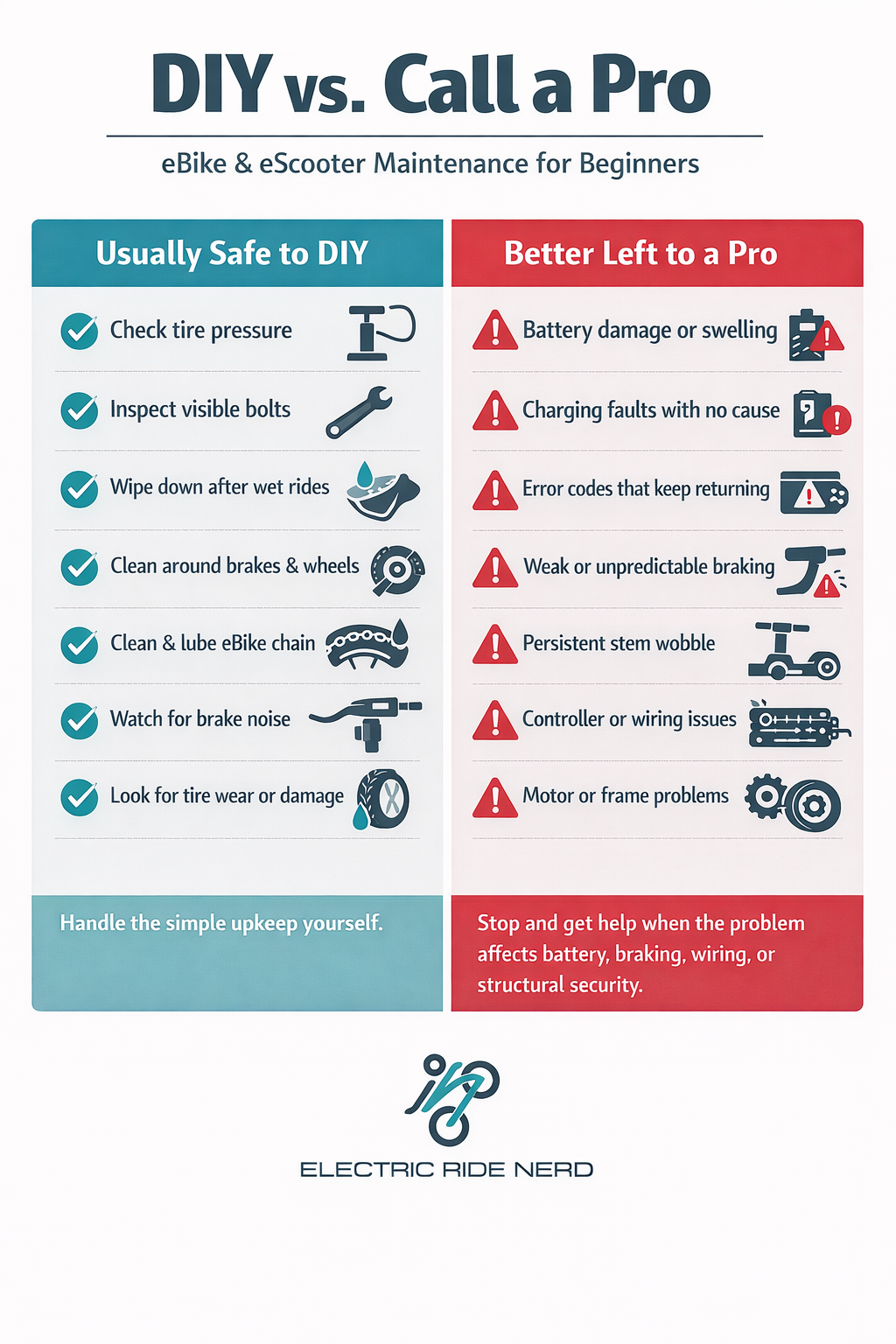
The basic rule is simple: if the issue involves the battery, internal wiring, controller, motor internals, or anything safety-critical that you do not fully understand, it is better to stop and get professional help.
Most routine maintenance is straightforward once you know what to look for. Checking tire pressure, tightening a loose bolt, or wiping down your ride after a wet commute can quickly become part of your weekly routine.
At the same time, not every issue should be handled at home. As your ride gets more complex, especially when batteries, wiring, or braking systems are involved, the margin for error becomes smaller.
The goal is not to avoid maintenance, but to build confidence in the areas that are safe to manage while recognizing when a problem needs a closer look.
Stop Riding and Get It Checked If…
There are times when continuing to ride is not worth the risk. Some issues go beyond routine maintenance and can quickly become safety concerns.
- Brakes feel weak, inconsistent, or unresponsive
- The battery becomes unusually hot, swollen, or damaged
- You hear grinding, clicking, or sudden new mechanical noises
- The frame, stem, or folding mechanism feels loose or unstable
- Power cuts in and out unexpectedly during a ride
- You notice exposed wires or damaged electrical components
These are not situations to troubleshoot on the road. Addressing them early can prevent more serious damage—and more importantly, reduce the risk of injury.
1. Battery Problems
Do not open the battery casing. Do not try to repair damaged cells. Do not improvise a fix if the battery is swollen, cracked, unusually hot, or refusing to charge properly.
Battery issues are not the place for experimentation. If the battery is physically damaged or behaving abnormally, stop using it and have it inspected by a qualified shop or the manufacturer.
2. Charging Problems That Do Not Have an Obvious Cause
If the charger, battery, or display is acting strangely and you have already ruled out simple issues like a loose plug or bad outlet, that is a good point to step back.
Repeated charging issues, flashing errors, or sudden range drops may point to a deeper electrical problem.
3. Error Codes and Electrical Faults
Many modern eBikes and eScooters show error codes when something goes wrong. Some point to a sensor issue, wiring problem, or communication fault between components.
A beginner can note the code, check the manual, and look for obvious external issues, but internal electrical troubleshooting is usually not a DIY job. One warning that appears once may not mean much on its own. But if the same code keeps returning, or the ride starts cutting power, charging poorly, or behaving unpredictably, that is a sign to stop guessing and have it checked professionally.
4. Brake Problems That Affect Safety
If the brakes feel weak, unpredictable, or hard to adjust properly, do not keep riding and hope it works itself out.
Electric rides are often heavier and faster than new riders expect. Good brakes are not optional.
5. Structural Issues or Recurring Wobble
If your scooter stem keeps loosening, your handlebars do not feel secure, or the frame develops a new creak or flex under load, it should be inspected properly.
Some noises are harmless. Some are early signs of a bigger problem. If the ride no longer feels solid, it is worth having a professional check it.
eBike vs. eScooter Maintenance: Where the Focus Changes
The general principles are similar, but the common trouble spots are a little different.
On an eBike, beginners usually spend more time thinking about chain care, brake wear, shifting, and tire pressure. There are more bicycle-style moving parts, so regular mechanical upkeep matters more.
On an eScooter, the focus is often on tire condition, stem security, folding hardware, brake feel, and keeping an eye on rattles or play in the front end. Scooters are compact and practical, but small issues in the stem or hinge area deserve quick attention.
While both eBikes and eScooters benefit from regular maintenance, the areas that need the most attention are slightly different.
| Maintenance Area | eBike Focus | eScooter Focus |
|---|---|---|
| Tires | Higher wear from weight and speed. Check pressure and tread regularly. | Smaller tires wear faster and are more prone to flats. Inspect often. |
| Brakes | Brake pads wear faster, especially on heavier or high-speed models. | Braking systems are smaller and can feel less forgiving. Check responsiveness. |
| Drivetrain | Chain, cassette, and derailleur require regular cleaning and lubrication. | No drivetrain, which reduces maintenance complexity. |
| Battery | Often larger capacity. Monitor charge cycles and storage habits. | Typically smaller but still sensitive to heat, cold, and charging habits. |
| Bolts & Frame | More components mean more bolts to check regularly. | Fewer parts, but folding mechanisms need attention. |
| Water Exposure | More tolerant overall, but still avoid heavy soaking. | More sensitive electronics. Avoid puddles and heavy rain. |
| Ride Feel Issues | Gear shifting problems or drivetrain noise may develop over time. | Rattles, stem looseness, or motor noise are more common indicators. |
Seasonal Maintenance Tips for Daily Riders
Seasons change how your eBike or eScooter behaves, and that changes what you need to watch.
Wet Weather
Rain adds grime, moisture, and more risk around charging areas and braking surfaces. After wet commutes, dry the ride off, especially around the charging port and brake area. If possible, store the ride somewhere dry rather than leaving it damp overnight.
Winter and Cold Weather
Cold temperatures can reduce battery performance and make your range feel noticeably shorter. That does not always mean something is wrong. It is often just how lithium-ion batteries respond to low temperatures.
If you can, store the battery or ride somewhere warmer than an unheated outdoor space. That helps performance and is usually better for long-term battery health. For a deeper look at seasonal performance drops, see how cold weather affects eBike and eScooter range.
Spring Tune-Up Mindset
After winter or a long stretch of rough weather, it is worth giving your ride a closer inspection. Check the tires, brakes, visible bolts, and overall feel of the ride before assuming it is ready for daily use again.
Seasonal conditions change more than comfort. They also change what your ride needs from you.
| Season | What Changes | What to Check |
|---|---|---|
| Spring | Wet roads, leftover grit, and rough pavement can reveal wear that built up over winter. | Check tires, brakes, visible bolts, and overall ride feel before returning to regular use. |
| Summer | Heat can affect battery comfort, tire pressure, and storage conditions. | Avoid leaving the battery in extreme heat and keep an eye on tire pressure. |
| Fall | Wet leaves, cooler temperatures, and shorter days can affect traction and visibility. | Check brakes, lights, tire condition, and battery performance as temperatures start to drop. |
| Winter | Cold weather can reduce range and make surfaces less predictable. Moisture and road salt can also add wear. | Store the ride in a dry place, wipe it down after wet commutes, and expect reduced battery performance. |
The Simple Rule: What You Handle and What You Leave Alone
For most beginners, the dividing line is easier than it seems.
You can usually handle tire pressure, basic cleaning, visible bolt checks, chain care on eBikes, and spotting wear before it becomes a bigger issue.
You should usually leave battery repair, controller or wiring issues, motor internals, serious brake problems, persistent wobble, and unclear electrical faults to a professional.
That is not a sign of inexperience. It is good judgment.
Where to Go Next: eBike Maintenance by Problem Area
This article is the starting point for beginner eBike and eScooter maintenance. Once you understand the basics, the next step is to focus on the part of your ride that affects you most.
If you are worried about battery life, start with basic eBike battery care. Charging habits, storage temperature, battery age, and replacement quality all affect long-term performance.
If your ride feels slow, heavy, or less efficient than it used to, start with tire pressure and rolling resistance. Low tire pressure is one of the easiest problems to miss, and it can affect comfort, range, handling, and flat risk.
If stopping feels weaker, noisier, or less predictable, focus on brake maintenance. Brakes are not the place to guess, especially on heavier eBikes or faster commuter rides.
If your eBike feels rough, noisy, or clunky when you pedal, look at the chain and drivetrain. A dirty or dry chain can make a good eBike feel worse than it really is.
If you ride in wet weather, pay attention to cleaning, drying, and storage. Rain, road grit, and salt can shorten the life of moving parts and create more wear around brakes, chains, bolts, and exposed components.
If you see an error code, sudden power cut, charging problem, or strange electrical behavior, slow down and check the manual first. If the same issue keeps coming back, it is usually time to involve the manufacturer or a qualified shop.
If you use your eBike for commuting, cargo, hills, or daily riding, your maintenance schedule matters more. More weight, more miles, and more stop-and-go riding all increase wear.
The point is not to learn everything at once. Start with the issue that affects your ride today, then build your maintenance confidence one habit at a time.
Frequently Asked Questions: eBike & eScooter Maintenance
Can I wash my eBike or eScooter with a hose?
It is better not to. Even if your ride has a high IP (water resistance) rating, pressurized water from a hose can push moisture past seals and into places it should not go, such as the motor, battery terminals, or display. A damp cloth, soft brush, and a careful wipe-down are much safer for the long-term health of your electronics.
How often should I check tire pressure?
If you ride regularly, check your pressure at least once a week. If you commute daily, a quick thumb-press check before every ride is a smart habit. Proper tire pressure is critical; low pressure increases rolling resistance (dropping your range), makes you more prone to “pinch flats,” and can make handling feel sluggish and unsafe.
How do I know if my brake pads are worn?
Common warning signs include a high-pitched squealing or metallic grinding noise, noticeably weaker stopping power, or feeling the brake lever pull significantly farther than usual. Many disc brake systems allow you to look inside the caliper; if the friction material is less than 1mm thick, it is time for a replacement.
Is a drop in range always a battery problem?
Not always. Range is highly sensitive to external factors. Lower temperatures, soft tires, headwinds, extra cargo weight, and frequent stop-and-go riding can all reduce your mileage. Before blaming the battery, ensure your tires are at the correct PSI and consider if your recent routes have been more demanding than usual.
Does my eBike or eScooter need professional service even if it still works?
Yes. Electric vehicles often continue to function while mechanical wear builds in the background. Periodic professional inspections can catch stretched cables, loose motor hardware, and worn bearings before they become expensive repairs or safety risks. For daily commuters, a bi-annual tune-up is highly recommended.
Final Takeaway
Beginner eBike and eScooter maintenance does not need to feel overwhelming. Most of what keeps your ride safe and dependable comes down to simple habits: keep the tires inflated, pay attention to the brakes, check for loose hardware, keep the ride clean, and treat the battery with care.
That covers far more than most new riders expect.
The key is knowing where your confidence should stop. Once the issue moves into the battery, internal electronics, or anything that affects structural safety, professional service is usually the right move.
Do the simple things well and do them consistently. That is how you keep your ride dependable, protect your investment, and make daily commuting less stressful.
Read Next in the Electric Ride Nerd Maintenance Series
This guide is the starting point for beginner eBike and eScooter maintenance. As the Electric Ride Nerd maintenance series grows, this section will become the main path into deeper guides on service schedules, battery care, brakes, tires, drivetrain cleaning, wet-weather riding, and troubleshooting.
The best place to start is with your maintenance rhythm. If you are not sure how often to check your eBike, read: How Often Should You Service an eBike? That guide explains what to check before each ride, what to inspect weekly, and when it may be time for a deeper service.
Once you understand the basic schedule, the next step is building a quick habit before every ride. Read: The 5-Minute eBike Pre-Ride Safety Check. That guide gives you a simple routine for checking tires, brakes, battery, lights, controls, cargo, and ride feel before you head out.
Next, make sure you have the right equipment on hand. Essential eBike Maintenance Tools for Beginners explains which tools are genuinely useful, what can wait until later, and how to choose tools that match your particular eBike.
Coming next: eBike Battery Maintenance for Beginners — a practical guide to caring for one of the most important and expensive parts of your electric ride, including routine care, storage, inspection, and the warning signs that deserve attention.
As each new guide is published, I will add it here so you can move from this basic overview into the exact maintenance topic you need next.