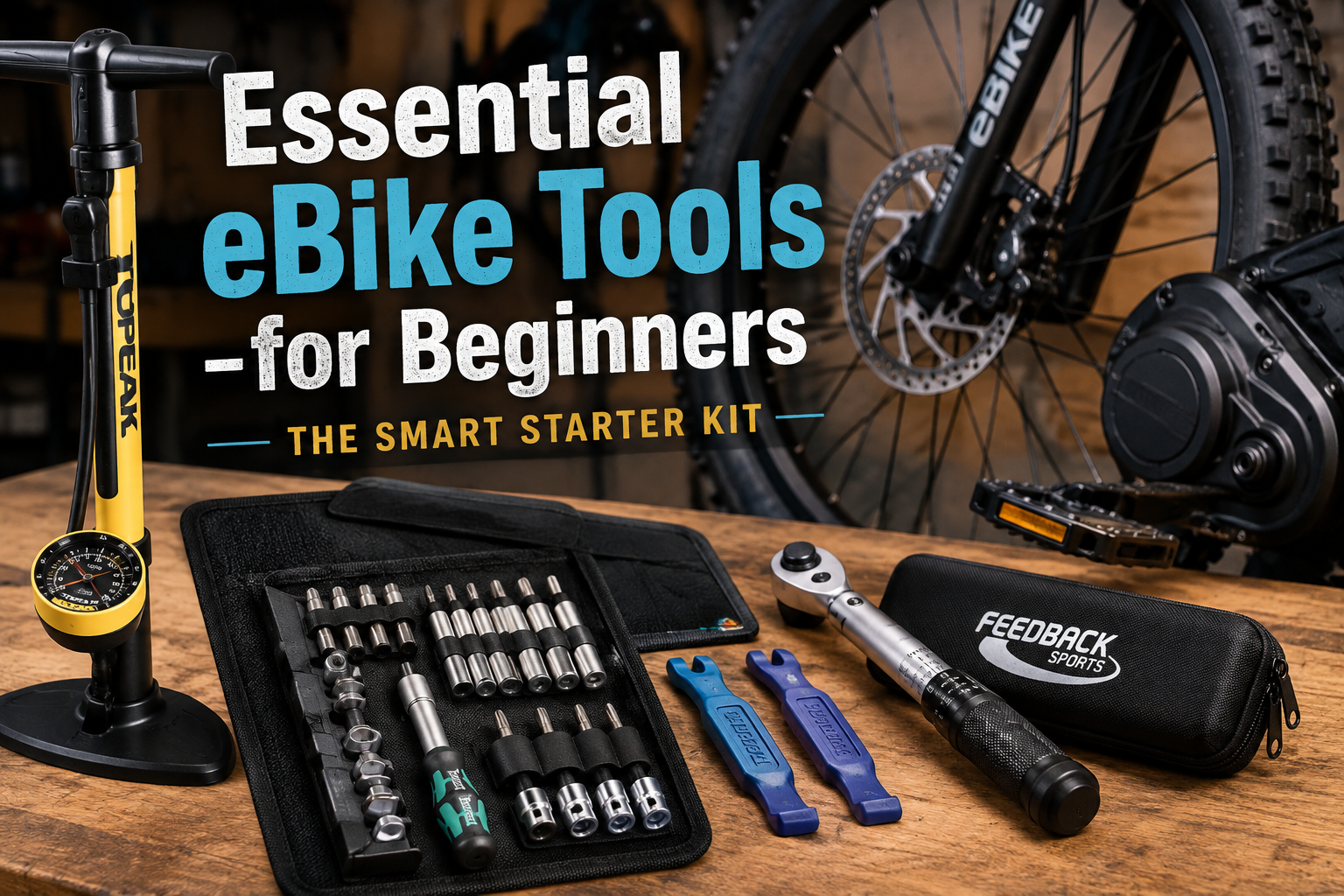
The right eBike maintenance tools can make routine care much easier, but owning an eBike does not mean you need to build a professional bicycle workshop in your garage.
Most beginners need a relatively small collection of dependable tools for checking tire pressure, tightening approved fasteners, cleaning the bike, lubricating the chain, and dealing with ordinary tire problems.
The goal is not to buy the largest toolkit you can find. It is to own the correct tools for your particular eBike and understand where beginner maintenance ends.
A well-chosen starter kit can help you notice problems earlier, perform routine care with greater confidence, and avoid damaging components with improvised or poorly fitting tools.
Quick Answer: What eBike Maintenance Tools Do You Need?
A basic eBike maintenance toolkit should normally include a bicycle floor pump with a pressure gauge, metric hex keys, any Torx bits used on the bike, correctly sized metric wrenches or sockets, bicycle tire levers, compatible puncture supplies, clean rags, soft brushes, bicycle-specific chain lubricant, an inspection light, and a small container for loose fasteners.
A suitable bicycle torque wrench is an important later addition once you begin tightening components with specified torque values.
Before buying any tool, check the owner’s manual, inspect the fasteners on your bike, identify the tire valves, and determine how the wheels are attached.
There is no single toolkit that is correct for every eBike.
Affiliate Disclosure: This article contains affiliate links. If you purchase through these links, Electric Ride Nerd may earn a commission at no additional cost to you. We only recommend gear we trust and have carefully researched.
Why the Correct Tools Matter
The wrong tool can turn a small adjustment into a damaged component.
A loose-fitting hex key can round the inside of a bolt. Pliers can mark or deform a nut. A worn screwdriver can slip out of a screw. A torque wrench that is poorly suited to the job may make it difficult to tighten a component accurately.
Overtightening is another common problem. Tighter does not always mean safer. Too much force can damage threads, distort clamps, crush components, or make future removal difficult.
The correct tool should fit cleanly and allow controlled pressure. When a manufacturer provides a torque specification, the objective is to reach that value—not to tighten the fastener as hard as possible.
Do eBikes Require Special Maintenance Tools?
Most basic eBike maintenance uses ordinary bicycle tools. Tires, wheels, brakes, chains, handlebars, pedals, racks, and fenders remain mechanical bicycle components.
However, an eBike may have larger axle hardware, hub-motor cables, torque washers, heavier wheels, model-specific fasteners, or additional electrical connectors.
The battery, motor, controller, wiring, display, and sensors also create an important boundary.
A mechanical toolkit does not qualify an owner to open a battery, alter wiring, repair a controller, or disassemble a motor.
Think of your toolkit as support for beginner eBike maintenance, not as permission to take the entire bike apart.
Check Your eBike Before Buying Tools
Begin with the owner’s manual. Look for maintenance instructions, required tool sizes, torque specifications, battery-handling procedures, wheel-removal instructions, and work reserved for authorized service.
Then inspect the bike itself.
| Part to Inspect | What to Identify | Why It Matters |
|---|---|---|
| Tire valve | Schrader or Presta | Determines pump compatibility |
| Common fasteners | Metric hex, Torx, or external nuts | Determines key and wrench sizes |
| Wheels | Axle nuts, thru-axles, or quick releases | Determines roadside and workshop tools |
| Torque markings | Numbers printed near clamps | Identifies torque-wrench requirements |
| Drivetrain | Chain, belt, derailleur, or internal gearing | Changes cleaning and tool needs |
| Battery | Removable or integrated | Changes safe maintenance preparation |
| Brakes | Mechanical or hydraulic | Helps define the beginner DIY boundary |
Do not assume another rider’s toolkit will fit your bike. Even different models from the same manufacturer may use different components.
Essential eBike Maintenance Tools for Beginners
A Floor Pump With a Gauge
A floor pump is normally one of the first tools an eBike owner should buy.
Choose a pump with a head that fits your tire valves, a gauge that is easy to read, a stable base, a hose long enough to reach the valves comfortably, and enough air volume for the tires you use.
A very high maximum pressure is not automatically better. Riders with large, low-pressure fat tires may benefit more from a high-volume pump than from one designed primarily for narrow, high-pressure road-bike tires.
Your five-minute eBike pre-ride safety check can help you notice a soft tire, but a pressure gauge gives you a real measurement when the tire needs attention.
ERN Recommended: Topeak JoeBlow Sport III Floor Pump
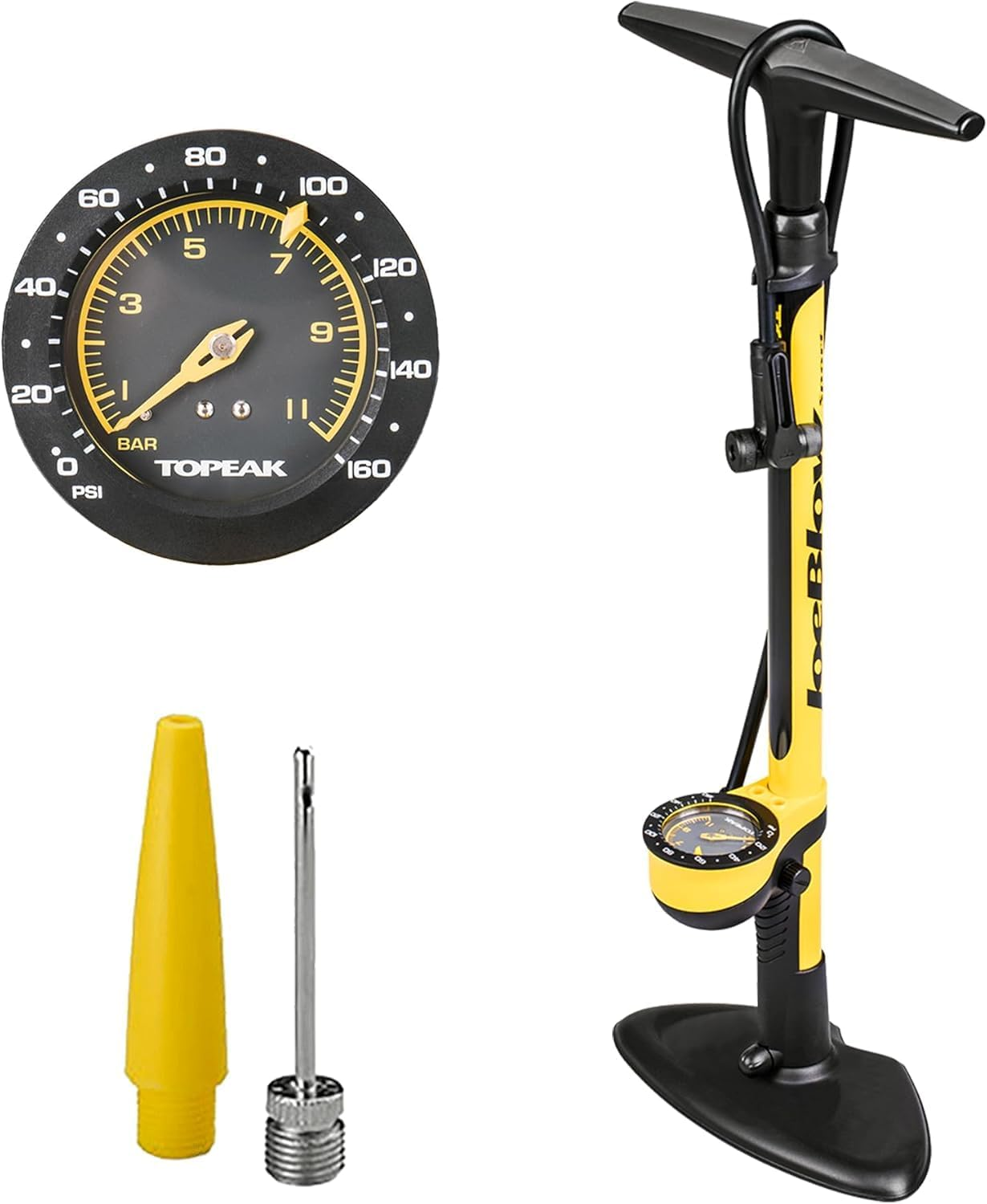
The Topeak JoeBlow Sport III is a full-size floor pump with a durable steel barrel and base, a large analog pressure gauge, a long hose, and a valve head designed to work with Presta, Schrader, and Dunlop valves.
Best for: Beginner eBike owners who want a durable home floor pump for regular tire-pressure checks and routine inflation.
Why ERN recommends it: It combines sturdy construction, an easy-to-read gauge, broad valve compatibility, and a well-established buyer history. It was also readily available for U.S. delivery when we reviewed it.
Before buying: Riders with very large fat-bike tires may prefer a dedicated high-volume pump designed to move more air with each stroke.
Check Current Price & Availability at Amazon.
Topeak JoeBlow Sport III Floor PumpMetric Hex Keys and Torx Bits
Metric hex keys are among the most commonly used bicycle tools. They may be needed for the stem, handlebar controls, seat post, brake levers, racks, fenders, and accessories.
Buy a set containing several metric sizes rather than guessing which two or three you need.
The key should insert fully, fit without rocking, have clean edges, and provide enough handle length or leverage for controlled use.
Do not use an imperial key that seems almost correct. A nearly fitting tool may damage the fastener when pressure is applied.
Some bicycle and eBike components also use star-shaped Torx fasteners. Inspect the bike before buying so you know which Torx sizes are genuinely required.
ERN Recommended: Wera Bicycle Set 1
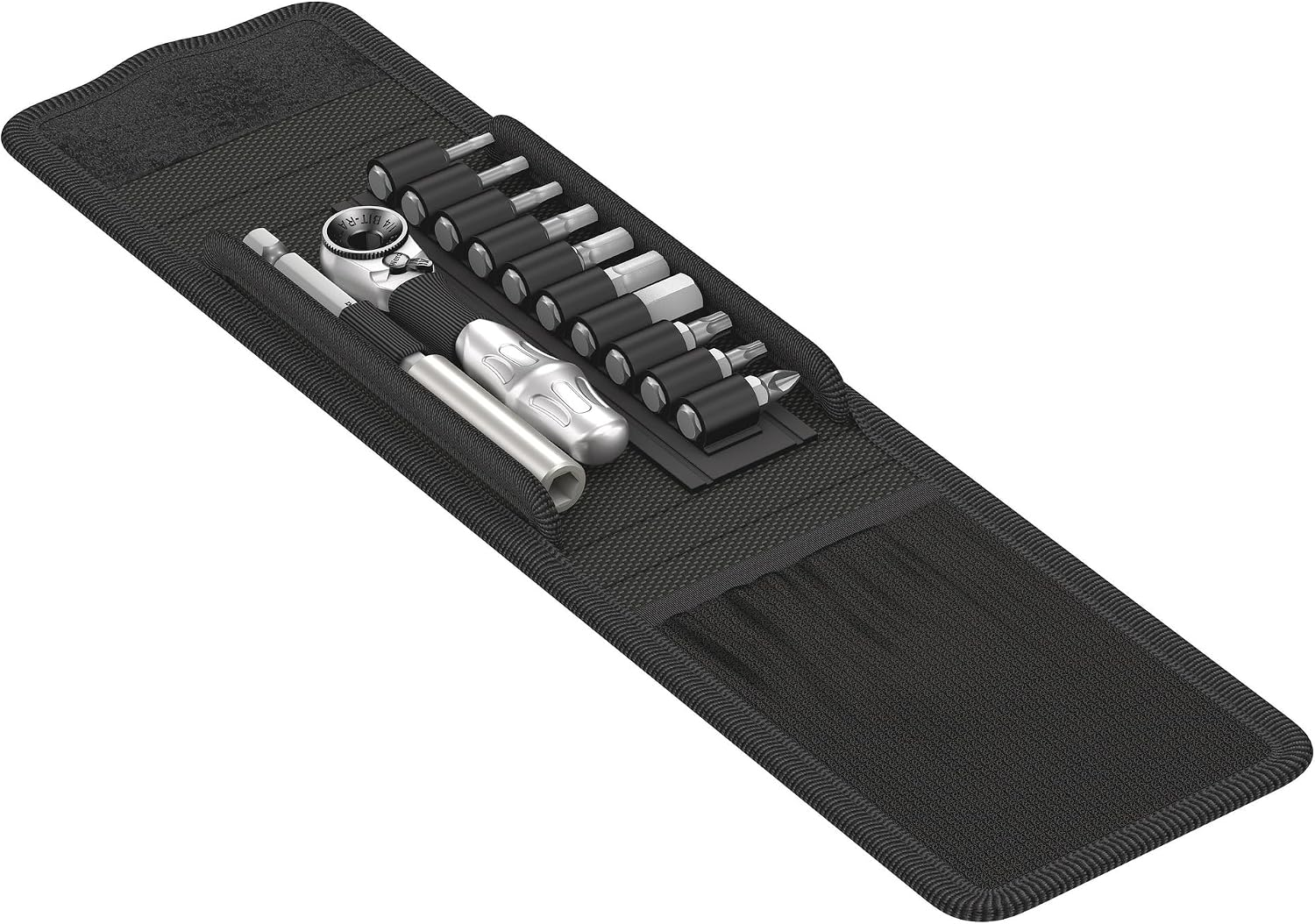
The Wera Bicycle Set 1 combines metric hex and Torx bits with a compact ratchet, extension, tire levers, and organized storage. The included metric hex sizes cover 2, 2.5, 3, 4, 5, 6, and 8 mm, along with T10 and T25 Torx bits and a PH2 screwdriver bit.
Best for: Riders who want a compact, high-quality set covering many common bicycle and eBike fasteners.
Why ERN recommends it: It gives a beginner a practical collection of commonly used tools without requiring the purchase of a much larger professional workshop kit. Its compact organization also makes it easy to store or travel with.
Before buying: Check your particular eBike. Some bikes may require T20, T30, a 10 mm hex bit, or another size not included in this set.
Check Current Price & Availability at Amazon.
Wera Bicycle Set 1Correctly Sized Wrenches and Sockets
Some eBikes use external nuts on wheels, racks, accessories, or other components. Use a correctly sized metric wrench or socket rather than pliers or a poorly adjusted wrench.
Wheel hardware requires additional caution.
A hub-motor wheel may include a motor cable, special washers, torque hardware, a specific axle-nut sequence, and a heavier-than-normal wheel.
Owning the correct wrench does not automatically make hub-motor wheel removal a suitable first repair.
Consult the manufacturer’s procedure before loosening the wheel hardware.
Tire Levers and Puncture Supplies
Plastic bicycle tire levers help lift a tire bead over the rim during tube removal.
Do not substitute screwdrivers, knives, or other sharp metal tools. They can damage the tube, tire, rim, or rim tape.
Your puncture supplies must match the wheel system. A spare tube requires the correct wheel diameter, tire-width range, valve type, and valve length.
Tubeless tires require different repair materials and procedures.
ERN Recommended: Pedro’s Bicycle Tire Lever Pair
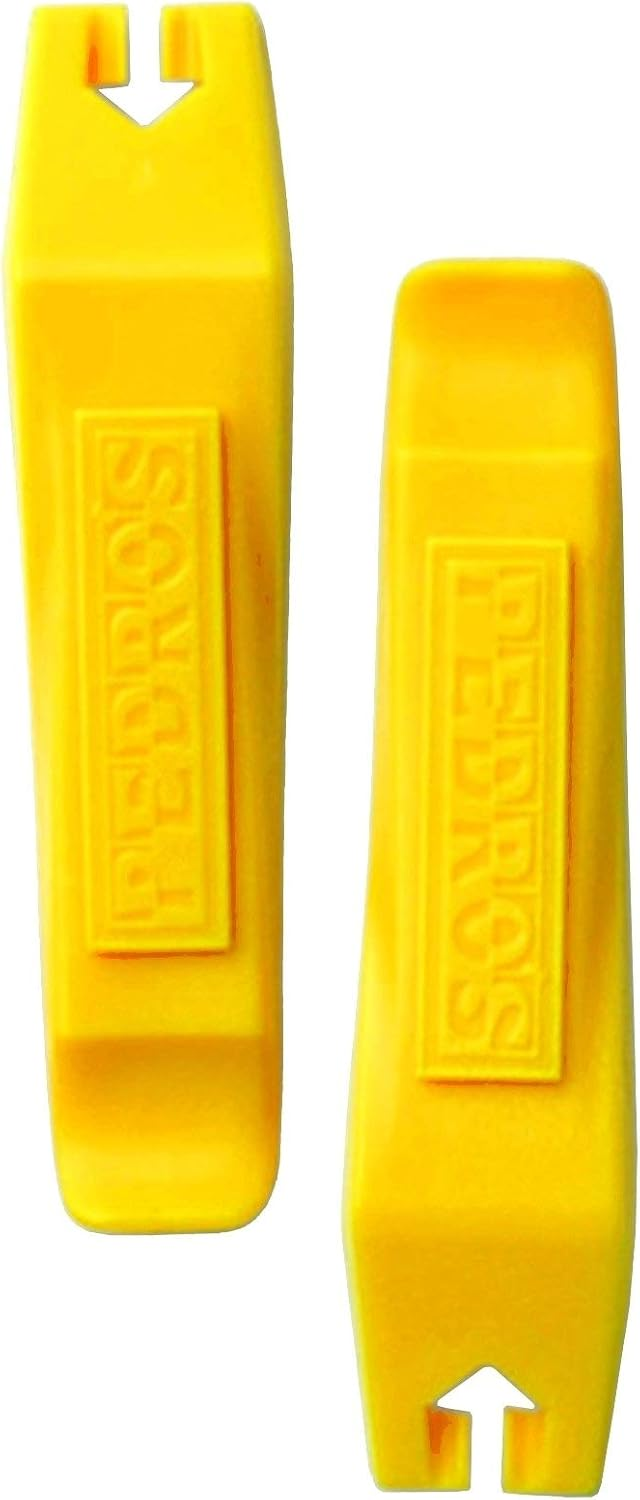
Pedro’s Bicycle Tire Lever Pair is a compact set designed specifically for removing bicycle tires during tube replacement or puncture repair. Their small size also makes them easy to carry in a roadside repair kit.
Best for: Beginner home maintenance and compact roadside repair kits.
Why ERN recommends them: They perform one important job without unnecessary extras, are inexpensive compared with many bicycle tools, and showed a favourable return-confidence signal when we reviewed the product.
Before buying: Tire levers are only one part of puncture readiness. You still need a compatible spare tube, patch kit, or tubeless-repair system for your particular eBike.
Check Current Price & Availability at Amazon.
Pedro’s Bicycle Tire Lever PairCleaning Supplies and Chain Lubricant
Basic eBike cleaning does not require a shelf full of chemicals.
A beginner can start with several clean rags, a soft general-purpose brush, a smaller detailing brush, gloves, bicycle-specific chain lubricant, and a small container for loose parts.
Keep oily drivetrain rags separate from materials used near brake rotors and pads. Oil or lubricant on a braking surface can reduce braking performance.
Follow the cleaning and battery-care instructions supplied with your particular eBike. If the manufacturer instructs you to remove the battery before cleaning, follow that procedure.
Avoid directing high-pressure water at the battery, display, electrical connectors, motor area, or bearings unless the manufacturer specifically permits it.
A future ERN article will explain the complete cleaning and lubrication process. This article is focused on the tools and supplies required.
When Should You Buy a Torque Wrench?
A torque wrench becomes valuable when you begin tightening components that have stated torque specifications.
These specifications are normally written in Newton metres, abbreviated as Nm.
Bicycle torque wrenches are sold in different working ranges, and one wrench may not cover every fastener on an eBike.
Many smaller bicycle components use relatively low torque values, while pedals, crank hardware, axle components, and other parts may require considerably more.
Before purchasing a torque wrench:
- Identify the torque specifications you expect to use.
- Choose a wrench whose operating range includes those values.
- Confirm that the required bits or sockets are included or readily available.
- Learn how to set, use, release, and store the wrench correctly.
Do not assume that a large automotive torque wrench is suitable for relatively low bicycle torque values.
A Premium Option: Feedback Sports Range Click
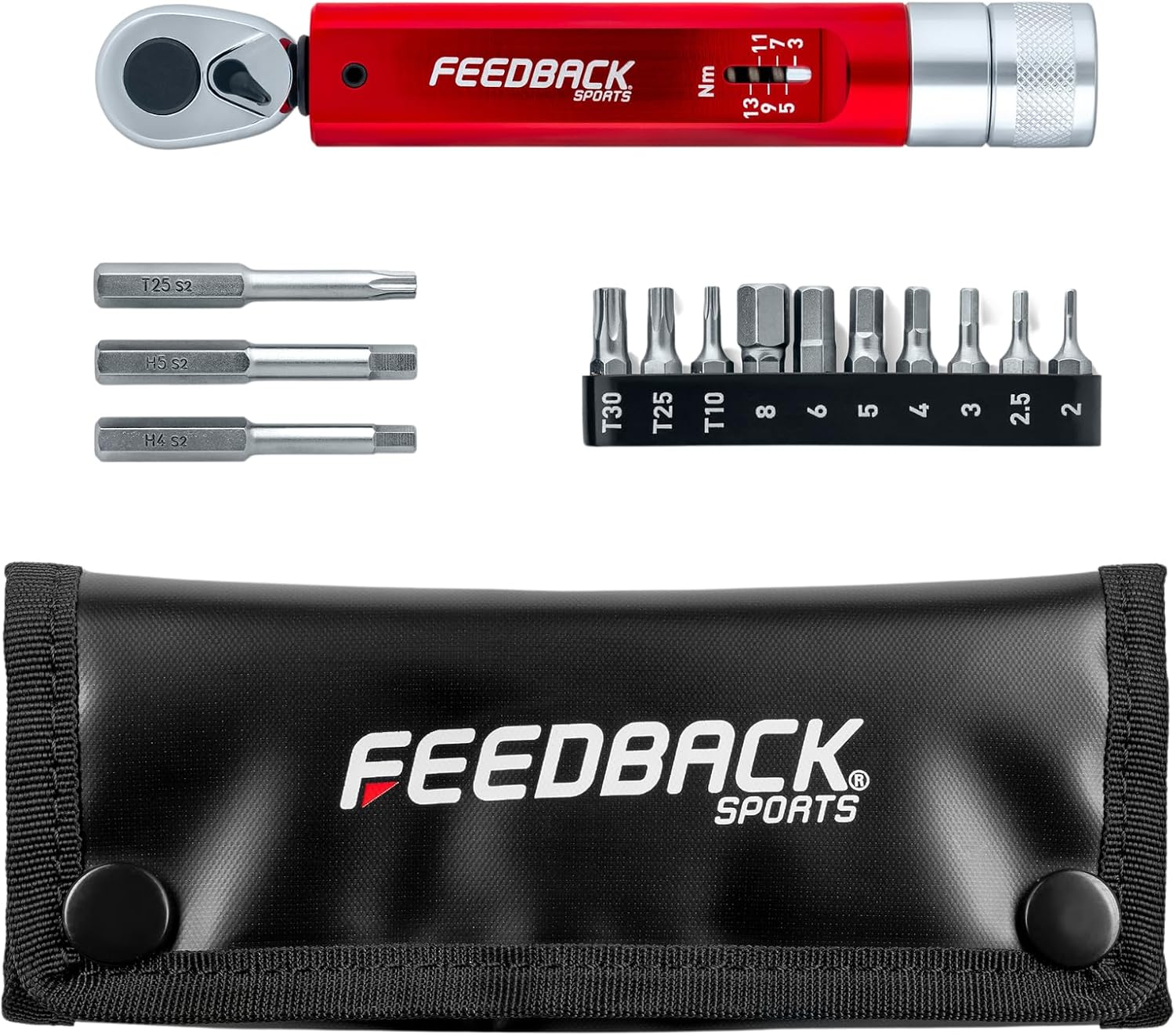
The Feedback Sports Range Click Torque Wrench covers 2–14 Nm and includes a collection of hex and Torx bits in a compact protective case.
Best for: Riders willing to pay more for compact organization, premium construction, and a bicycle-specific torque tool.
ERN’s assessment: It is a credible premium option, but during our review its price placed it well above several other torque-wrench choices. Its 14 Nm upper limit also means it cannot cover every eBike fastener, so ERN is not naming it our recommended beginner value choice.
Before buying: Check the torque specifications for your eBike and confirm that the 2–14 Nm working range covers the fasteners you expect to maintain.
Check Current Price & Availability at Amazon.
Feedback Sports Range ClickThe Feedback Sports Range Click Torque Wrench covers 2–14 Nm and includes a collection of hex and Torx bits in a compact protective case.
It is a credible option for riders who value compact storage, good organization, and a bicycle-specific tool.
ERN is not labeling it as our recommended beginner value choice. During our review, its price placed it well above several other torque-wrench options, while its 14 Nm upper limit means it still cannot cover every eBike fastener.
Best for: Riders willing to pay more for compact organization and premium construction.
Before buying: Confirm that the 2–14 Nm range covers the fasteners you expect to work on.
Selection basis: Research-reviewed; not personally tested.
[OPTIONAL AMAZON AFFILIATE BUTTON: Check Current Price on Amazon — Paid Link]
For now, ERN is not naming a single torque wrench as our recommended beginner choice. We would rather leave the category open than recommend a product simply because we want an affiliate link.
Household Tools That Can Cause Problems
Some ordinary household tools are useful. A flashlight, soft brush, parts container, correctly sized screwdriver, and suitable metric wrench can all perform well.
Problems begin when an ordinary tool becomes a substitute for the correct one.
Avoid using:
- Pliers in place of a fitted wrench
- Worn screwdriver tips
- Adjustable wrenches that cannot grip securely
- Imperial keys in metric fasteners
- Metal screwdrivers as tire levers
- Power impact tools on ordinary bicycle fasteners
- Torque wrenches outside their intended measuring range
The question is not merely whether the tool can turn the fastener. It is whether the tool fits correctly and provides enough control to perform the work without causing damage.
Useful Tools to Add Later
Once the starter toolkit is established, add tools only when a specific maintenance job requires them.
Useful later additions may include a chain-wear checker, master-link pliers, a compatible chain tool, valve-core tool, pedal wrench, repair stand, and compact roadside multitool.
A chain-wear checker can provide a more objective indication of chain wear than relying only on appearance.
An eBike repair stand requires additional care because eBikes are often heavier than conventional bicycles. Check the stand’s weight capacity, stability, and permitted clamping points before purchasing.
Specialty brake, wheel, drivetrain, suspension, motor, and electrical tools should only be purchased when you understand both the procedure and its safety boundary.
Home Tools and Roadside Tools Are Different
A home toolkit can contain longer-handled keys, a floor pump, cleaning materials, a torque wrench, a repair stand, and larger organizers.
A roadside toolkit must be compact. It may contain a compatible multitool, tire levers, a spare tube or puncture supplies, a portable pump, and any wrench required for ordinary wheel removal.
Do not assume a small multitool can replace a comfortable home workshop tool. Short handles and compact designs may provide less reach and control.
At the same time, you do not need to carry your entire home toolkit on every ride.
Build the roadside kit around the problems you can realistically and safely correct away from home.
Build Your eBike Toolkit in Stages
| Stage | Purchase | Purpose |
|---|---|---|
| 1. Tire pressure | Floor pump and gauge | Maintain correct tire pressure |
| 2. Common fasteners | Metric hex and required Torx tools | Adjust permitted fasteners |
| 3. Basic care | Rags, brushes, lubricant, and gloves | Clean and maintain visible parts |
| 4. Puncture readiness | Tire levers, compatible tube, or repair supplies | Address ordinary tire problems |
| 5. Controlled tightening | Suitable torque wrench and bits | Tighten specified components accurately |
| 6. Job-specific tools | Chain, pedal, wheel, or stand equipment | Expand as skills and needs develop |
The best way to build your eBike maintenance tools collection is gradually, adding equipment as your skills and maintenance needs grow.
It also works naturally with how often you should service an eBike, because the tools you need become clearer as your maintenance routine develops.
Store Your Tools So You Will Use Them
Keep your toolkit in a dry, organized box, drawer, or cabinet near the area where you normally inspect the bike.
Store clean tools separately from oily rags. Return hex keys, sockets, and bits to their holders so missing sizes are easy to notice.
Keep the owner’s manual or a digital copy nearby, along with a record of frequently used torque specifications.
Replace tools that become rounded, cracked, bent, corroded, difficult to adjust, or unreliable.
A damaged tool can ruin an otherwise good fastener.
When Tools Are Not Enough
Stop working and seek qualified assistance when the problem involves:
- A swollen, cracked, leaking, unusually hot, or damaged battery
- Burned, exposed, or melted wiring
- Intermittent electrical power
- An unresolved system error
- Weak or unpredictable braking
- A seized or badly damaged safety-related fastener
- Motor or controller internals
- Structural frame or fork damage
- A wheel or steering problem you cannot identify confidently
- Work the manufacturer reserves for authorized service
Lithium-ion batteries used in eBikes can present serious fire, overheating, burn, and electrical hazards when they are damaged, defective, or improperly handled.
Calling a qualified technician is not a failure of home maintenance.
Recognizing the limits of your tools and experience is part of responsible eBike ownership.
Final Thoughts: Buy Tools With a Purpose
A good set of eBike maintenance tools does not need to fill an entire workshop.
Start with a dependable floor pump, correctly fitting metric and Torx tools, cleaning supplies, chain lubricant where applicable, tire levers, and compatible puncture supplies.
Add a torque wrench when you are ready to work with specified tightening values. Add chain, wheel, brake, or drivetrain tools only when a real maintenance need justifies them.
Most importantly, remember that owning a tool does not make every repair a beginner repair.
The best toolkit helps you complete routine maintenance confidently, identify problems earlier, and recognize when professional service is the sensible choice.
Do I need a special tool kit for an eBike?
Not usually. Most beginner eBike maintenance uses ordinary bicycle tools, but the required sizes depend on the bike and its components. Some eBikes also have larger axle hardware, motor cables, or model-specific parts.
Can I buy one complete kit containing everything?
You can, but a large kit is not necessarily the most economical choice. Many kits contain tools a beginner may never use while omitting a size required by a particular eBike. A smaller toolkit built around your bike is often more useful.
Is a torque wrench necessary for eBike maintenance?
It becomes important when tightening components with manufacturer-specified torque values. Choose the wrench according to the required working range rather than assuming any torque wrench will be suitable.
Can I use household tools on an eBike?
Yes, when the tool is the correct type and size. Do not substitute pliers, loose-fitting keys, worn screwdrivers, or improvised tire tools.
What size hex keys do eBikes use?
There is no universal size. Many bicycles use several metric hex sizes, while some components also use Torx fasteners. Inspect the bike and consult its documentation before purchasing.
How does ERN choose recommended products?
ERN considers whether the product suits the intended job, provides reasonable quality and value, is practical for the intended rider, and shows no significant warning signs during our research. We also state whether a recommendation is based on research or actual ERN testing.
Does an eBike owner need a multimeter?
Most beginners do not need a multimeter for routine maintenance. Owning one should not be treated as permission to open a battery, probe unfamiliar contacts, alter wiring, or bypass an electrical safety system.