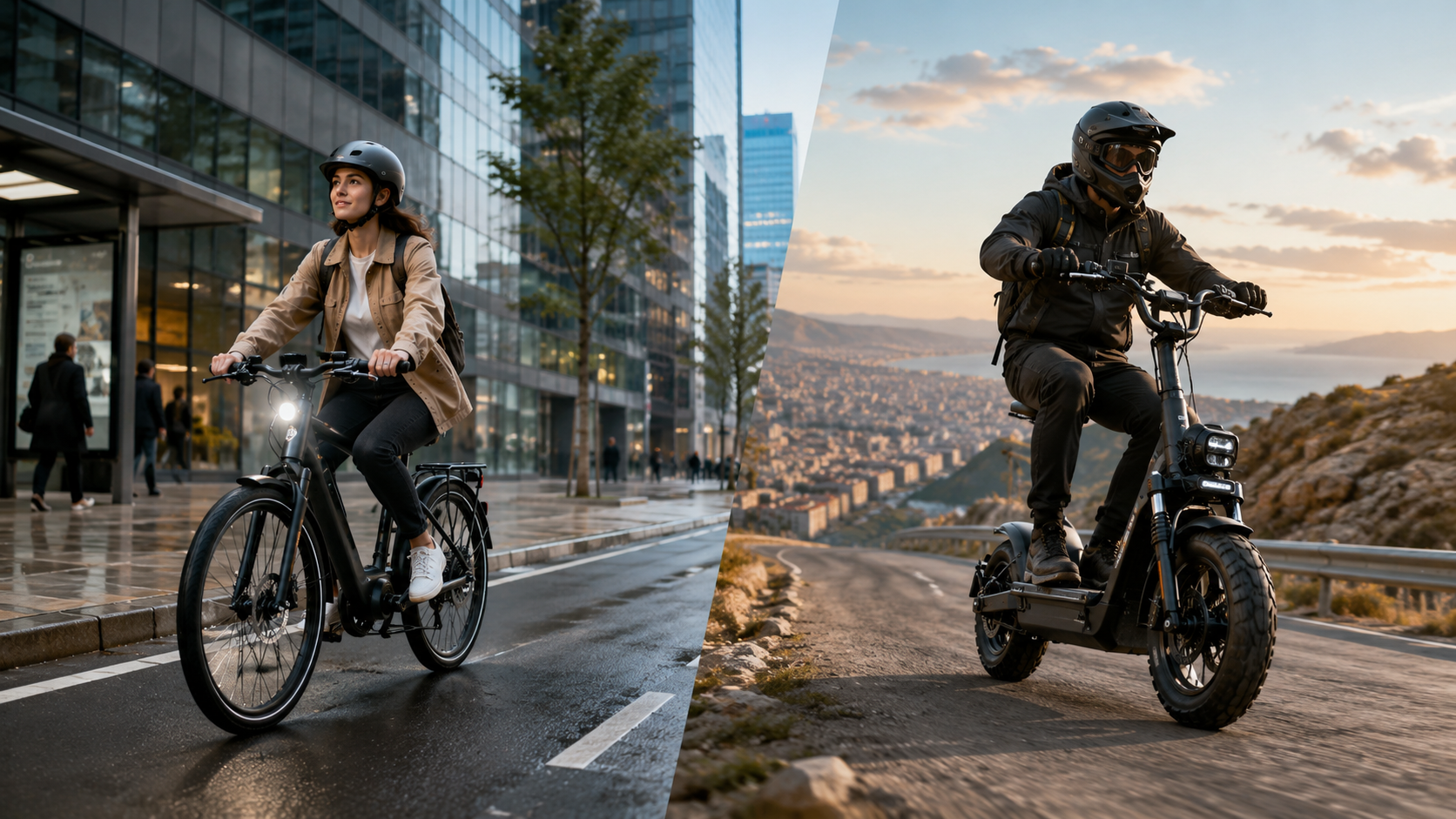
Choosing an eMobility device in 2026 is not just about finding something fast or fun. For many riders, it is a real transportation decision. The right machine can replace short car trips, simplify commuting, and make everyday travel easier. The wrong one can feel too heavy, too awkward, too high-maintenance, or simply wrong for the way you actually move through your week.
That is where many buyers get stuck.
A lot of people start shopping for an eBike, eScooter, or eSkateboard thinking they want the most powerful machine they can afford. Others go too far in the other direction and buy something light and simple, only to realize it struggles on hills, rough pavement, or longer routes. In real life, the choice often comes down to two different types of machines: the practical daily driver and the more powerful weekend beast.
This guide is for riders trying to decide which one fits their life. If your goal is a low-stress ride for work, errands, and daily transportation, you may need something very different from a rider who wants steep-hill power, stronger acceleration, and a more aggressive ride feel. The best choice is usually the one that solves your actual problems, not the one with the biggest spec sheet.
Who This Guide Is For
This guide will be especially useful if you are trying to choose a ride for one of these situations:
- a short or mid-range city commute
- a route with hills, broken pavement, or rougher streets
- mixed travel that includes transit, stairs, or office storage
- apartment living where charging and carrying matter
- weekend riding where power and capability matter more than portability
Commuter vs Performance: What Kind of Rider Are You?
Before comparing batteries, torque, or top speed, it helps to be honest about how you plan to ride most of the time. Many buying mistakes happen when someone shops for the ride they imagine using instead of the one they will actually use on a normal weekday.
The Daily Driver
A daily driver is built around ease, reliability, and low friction. It is the kind of ride that helps you get to work, cross town, run errands, or connect with transit without turning every trip into a project.
For many commuters, that means lower weight, simpler maintenance, and practical features that support everyday use. Integrated lights, fenders, dependable tires, and a shape that works with normal storage matter more here than raw output. If you need to carry the device into an apartment, store it under a desk, or lift it into a trunk, those details matter quickly.
A good commuter model usually feels easy to live with. It starts when you need it, rides predictably, and does not ask much from you beyond charging it and keeping it in basic working order.
The Weekend Beast
A performance-focused ride is built around stronger power, better hill climbing, and a more demanding ride experience. This is where you start to see dual-motor scooters, more powerful boards, and higher-torque bikes designed to feel planted and capable when speed, grade, or rough surfaces increase.
These machines often make more sense for riders dealing with steep terrain, longer open routes, or roads where stronger acceleration and better stability improve confidence. They can also be more enjoyable for riders who simply want something more serious and more capable than a standard commuter setup.
The trade-off is that extra capability usually comes with extra size, extra weight, and more upkeep.
Why Buying Too Much Machine Can Backfire
It is easy to assume that more power is always better. In practice, overbuying can create new problems.
A high-output scooter or bike may look ideal until you have to carry it up stairs, turn it around in a hallway, or find a place to store it at work. Heavier machines can also demand more attention over time, especially when they use more complex braking systems, suspension parts, or higher-performance drivetrains.
That does not mean performance machines are a mistake. It means they should solve a real problem. If your route includes steep hills, rough pavement, or longer distances, the added size and power may be worth it. If your route is mostly flat, short, and practical, then extra power can become something you carry around rather than something you truly use.
A good rule is simple: buy for the ride you do every week, not the one you imagine doing once in a while.
What Matters More: Wattage, Torque, or Motor Type?
Many buyers still focus too hard on wattage because it is one of the first numbers brands promote. But wattage alone does not tell you how a ride will feel under real-world load. The more useful question is not just how much power a machine claims, but how that power actually feels when you are climbing, accelerating, or carrying rider weight in real conditions.
Torque Matters More Than Many New Riders Expect
If you live in a hilly area, torque often matters more than raw wattage. Torque is what helps a machine get moving from a stop, hold speed on an incline, and feel strong under load.
For a flatter city commute, a modest setup may be completely fine. But once repeated hills, heavier riders, or steeper bridges enter the picture, stronger torque becomes much more important. That is why some machines feel perfectly adequate in one city and frustrating in another.
If your route is mostly flat, you may not need to chase high torque numbers. If your ride includes real hills, torque deserves much closer attention.
Hub Motors Usually Make More Sense for Everyday Commuters
For many commuter eBikes, hub motors remain a practical choice because they are simple, dependable, and easy to live with. Because hub motors operate more simply in everyday use, they often fit the low-fuss ownership style many commuters want.
That simplicity matters. If you want a ride that feels easy to own and easy to use, a hub motor setup often fits the job well.
Mid-Drive Systems Make More Sense When Terrain Gets Serious
Mid-drive eBikes shine when the terrain becomes steeper or more demanding. Because they work through the bike’s gears, they can make better use of torque on climbs and feel stronger in varied terrain.
That trade-off becomes clearer once hills and more demanding terrain enter the picture. Mid-drive systems usually ask more from the rider and can bring more drivetrain wear over time. That can be worthwhile for riders who need the extra climbing strength, but it is not automatically the best fit for a simple city commute.
Dual Motors Change the Conversation for Scooters and Boards
For eScooters and eSkateboards, performance usually starts to look very different once dual motors enter the picture. Dual motors matter not just for acceleration, but also for traction and stronger real-world control.
For a simple commute, a single-motor model may still be the smarter choice because it is often lighter, more efficient, and easier to live with. But for riders who need stronger hill performance or a more capable ride feel, dual motors can make a noticeable difference.
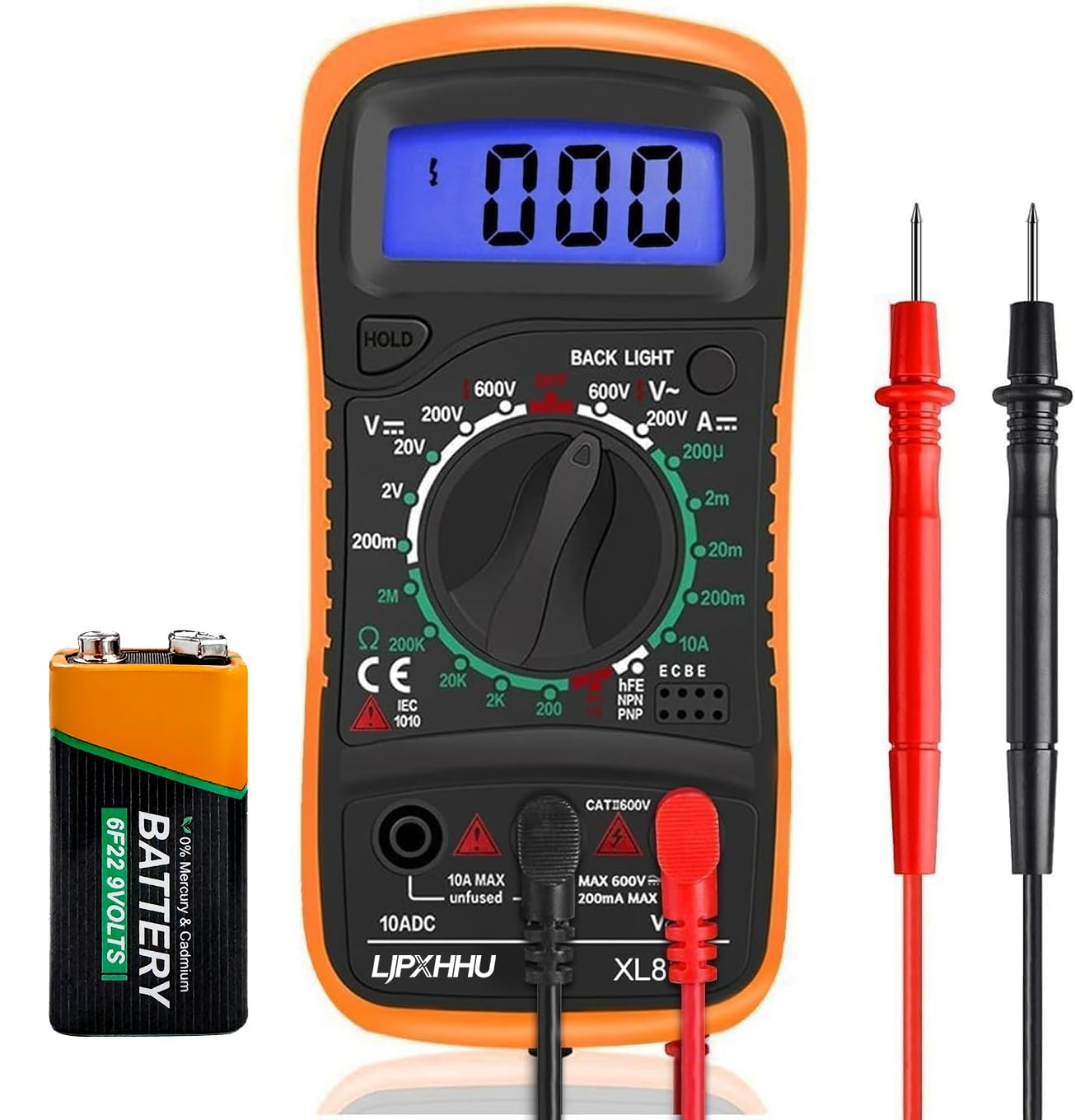
Digital Multimeter Voltmeter Battery Voltage Multi Tester
Troubleshoot automotive and household electrical issues with confidence using our professional-grade Digital Multimeter. Designed for precision and safety, it accurately measures AC/DC voltage, current, resistance, and more.
Featuring a large backlit LCD, data hold, and a rugged, drop-resistant protective shell with a built-in stand, it’s perfect for both beginners and pros. Includes test leads, a 9V battery, and a 2-year quality guarantee for total peace of mind.
Get yours today and work with professional accuracy!
Check Current Price & Availability at Amazon.
Battery Range in Real Life: What Buyers Should Actually Look At
Battery marketing can be misleading, especially when brands lean on ideal range numbers. For most riders, the better question is not “What is the claimed range?” but “How much usable range am I likely to get in real conditions?”
Watt-Hours Give You a Better Starting Point
Looking at watt-hours is usually more useful than trusting headline range claims. A commuter model may use around 15 to 25 watt-hours per mile, while a more aggressive performance machine can consume much more.
That is one reason many buyers overestimate how far a heavier machine will go in daily use. A larger battery does not automatically translate into a more useful commute if the machine itself is heavier and less efficient. If you want a more accurate way to compare models, it helps to understand how to calculate the real range of an eBike or eScooter before you buy.
Battery Safety Belongs in the Buying Decision
Battery safety should be treated as a serious buying factor rather than a bonus feature. Battery quality, system design, and responsible manufacturing matter just as much as headline performance.
That is the right level of focus for this article. You do not need to get deep into certification details here to make the bigger point: a dependable battery system is part of what makes a ride practical, safe, and trustworthy over time.
Removable Batteries Can Be a Huge Everyday Advantage
This is one of the most overlooked ownership features in eMobility.
If you have to carry a heavy scooter upstairs just to charge it, ownership can become frustrating very quickly. If you live in an apartment, share storage, or cannot easily bring the whole machine inside, a removable battery may matter more than a performance upgrade. It can be the difference between a ride that fits your life and one that becomes frustrating over time.
Portability vs. Ride Comfort: Which Matters More?
A lot of riders want both a light machine and a smooth, stable ride. Sometimes you can get close, but there is usually a trade-off.
Before looking at the table below, it helps to remember one simple point: a better commuting machine is not always the lightest one, and a better performance machine is not always the most powerful one. The better choice is the one that removes the most friction from your route.
| Category | Daily Driver | Weekend Beast |
|---|---|---|
| Best for | Commutes, errands, mixed daily use | Hills, speed, longer open rides, demanding terrain |
| Typical feel | Simple, practical, easy to live with | Powerful, planted, more aggressive |
| Weight | Usually lighter and easier to carry | Usually heavier and harder to move indoors |
| Motor setup | Often single motor or simpler hub-based system | Often dual motor or high-torque performance system |
| Hill performance | Fine for moderate grades | Better for steep hills and repeated climbs |
| Storage | Better for apartments and offices | Can be bulky and harder to store |
| Maintenance | Usually lower | Usually higher |
| Ride comfort | Good on smoother city routes | Better on rougher roads at higher speeds |
| Best buyer | Wants reliable transportation with low friction | Wants stronger capability and accepts more weight and upkeep |
Lightweight Models Win When You Carry Them Often
If your routine includes stairs, transit, office entry, shared storage, or lifting the device into a vehicle, lower weight matters immediately. This matters even more for riders who combine their trip with transit, stairs, or office storage.
For riders in apartments or mixed-transit commutes, portability can matter more than speed. A machine that is easy to fold, easy to move, and easy to store often gets used more consistently.
Heavier Machines Often Ride Better on Bad Streets
On the other hand, larger machines often feel more stable once pavement gets rough. Larger tires and better suspension can make a real difference on cracked asphalt, potholes, and rougher city streets.
If your commute is rough enough, comfort becomes part of practicality. A machine that beats you up every day may be portable, but that does not make it the right commuter choice.
What Will Cost More Over Time?
The purchase price is only part of the story. Long-term ownership costs often vary depending on whether you choose a simple commuter machine or a more aggressive performance model. In general, a ride with more demanding components and harder day-to-day use will usually cost more to maintain over time.
Simpler Systems Usually Mean Less Weekly Attention
A commuter-focused ride with a simpler drive system and fewer adjustable parts is often easier to live with over time. That can mean fewer small maintenance tasks, fewer tuning issues, and less time spent checking things before each ride.
That kind of simplicity matters when the ride is a tool, not a hobby.
Performance Models Can Demand More From You
Once you move into stronger performance territory, maintenance often becomes a bigger part of ownership. That is not always because the machine is poorly made. In many cases, it is because added capability leads to harder use. A more powerful ride is more likely to be ridden faster, pushed up steeper hills, used on rougher surfaces, and taken on longer or more demanding trips. Over time, that wider range of use can increase wear on tires, brakes, drivetrains, suspension components, and other moving parts.
That does not make a performance machine a bad choice. It just means the owner needs to be more realistic about what upkeep may look like. Some of that maintenance may be simple enough to handle at home, while other jobs are better left to a shop. Learning the difference is part of owning a more capable machine, which is why it helps to understand what eBike and eScooter maintenance beginners can usually handle themselves and when professional service makes more sense.
Tire Choice Affects Convenience More Than Buyers Expect
Tire Choice Affects Convenience More Than Buyers Expect
Another practical difference shows up in tire choice. Commuter-focused rides often lean toward puncture resistance and lower downtime, while performance models may lean harder into grip and ride feel.
If your machine is supposed to get you to work on time, convenience matters. If it is supposed to maximize ride feel and output, you may accept a little more upkeep in return.
Which One Should You Choose?
If your daily ride is short, mostly flat, and full of normal life obstacles like stairs, storage, and charging limitations, a commuter-focused machine is probably the smarter buy. You are more likely to use it often, live with it more comfortably, and spend less time dealing with extra weight or complexity.
If your route is hill-heavy, rough, longer, or more demanding, a performance-oriented ride may be worth the trade-offs. In that case, the bigger battery, stronger motor system, and more stable ride feel are not luxuries. They are what make the machine work for your environment.
In other words, the best ride is the one that removes the biggest obstacle from your routine.
Frequently Asked Questions
Is a performance eBike worth it for a short daily commute?
Usually not, unless your commute includes steep hills, rough roads, or other conditions that justify the added size and power. Your original draft landed this answer well and the logic still holds.
Is a dual-motor scooter too much for city commuting?
It can be. If your streets are mostly flat and your commute is practical rather than performance-focused, a lighter single-motor model may be the better fit. Dual motors make more sense when you need stronger hill climbing, better traction, or a more capable ride feel.
What matters more for hills: watts or torque?
For real hill climbing, torque usually tells you more. Wattage still matters, but torque is often the better clue for how confidently a machine will move under load and on steeper grades. That was one of the strongest technical distinctions in your original draft.
Are removable batteries worth it?
For many riders, yes. If you live in an apartment, park in a shared area, or do not want to carry the full weight of the machine inside to charge it, a removable battery can make ownership much easier.
Is a heavier eMobility device always better?
No. Heavier machines can feel more stable and more capable, but they are also harder to carry, store, and move around. The better choice is the one that fits your route and daily routine.
Final Thoughts
The choice between a daily driver and a weekend beast is really a choice about what kind of friction you want to remove from your life.
If your biggest issue is carrying, storing, charging, and using the machine in a normal daily routine, lean toward the commuter side. If your biggest issue is hills, rough terrain, longer distances, or a need for stronger performance, then a heavier and more capable machine may be the better investment.
In 2026, the smartest eMobility purchase is not the one with the biggest numbers. It is the one that fits where you live, how you ride, and what you need the machine to do every week.
If you have enjoyed this article, please also read our other post.
From Range Anxiety to Total Confidence: How Riders Commute Without Planning Every Charge