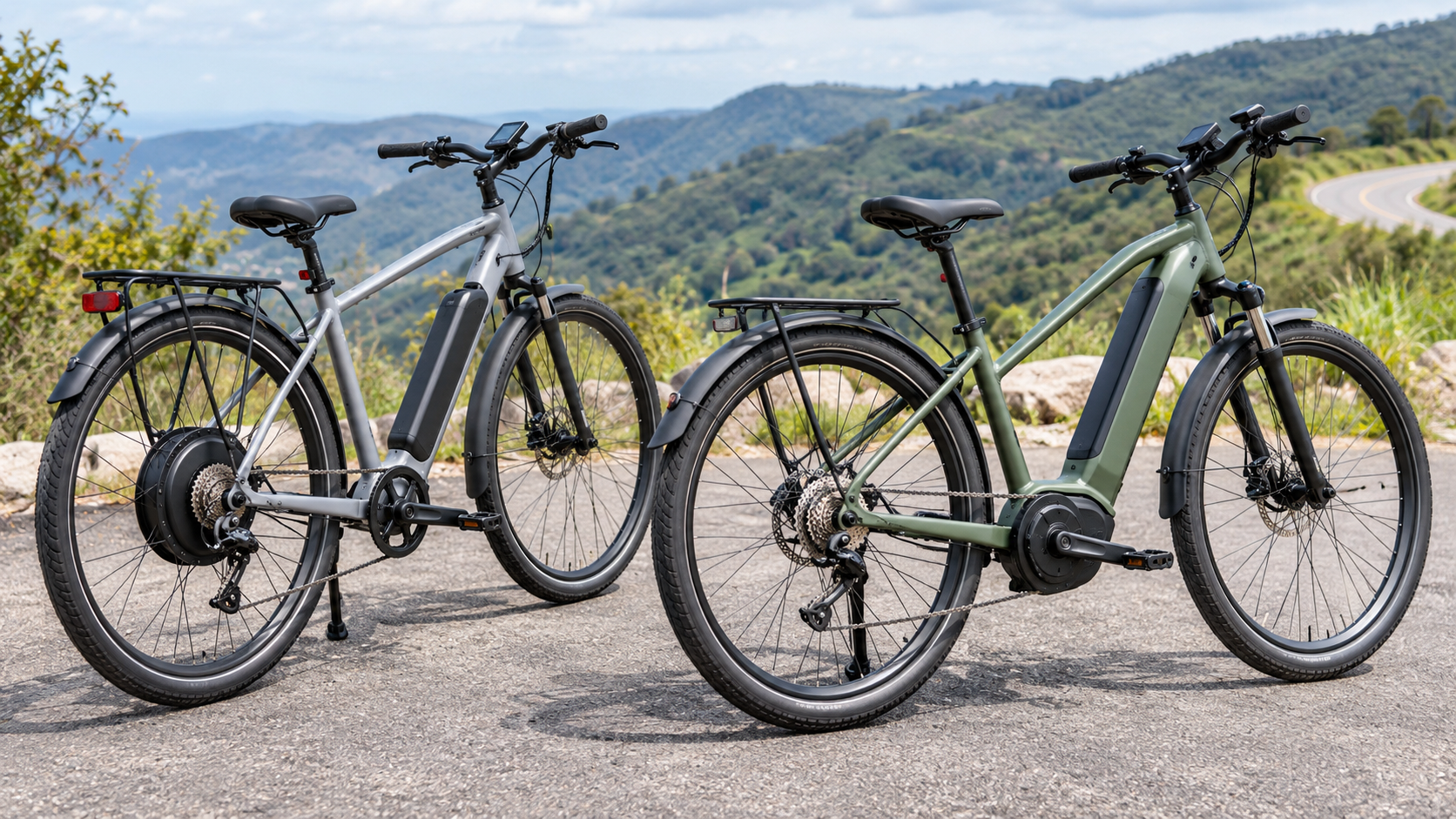
Choosing between a hub motor vs mid-drive eBike involves more than motor location. The setup affects how your bike climbs hills, feels on the road and handles everyday maintenance.
A rear hub motor powers the rear wheel. A mid-drive sits near the pedals and uses the bike’s drivetrain to transfer power to the wheel. That difference can affect hill climbing, chain wear, fixing a rear flat and the total cost of ownership.
Neither design is automatically better. The right choice depends on the hills you ride, what you carry, your budget and whether you can get the bike serviced locally.
Table of Contents
ToggleHow a Hub Motor Delivers Assistance
A rear hub motor is built into the rear wheel. It turns that wheel without sending all of its motor force through the bicycle chain and cassette. The rider still uses the bicycle gears for pedaling, but the motor generally works independently of those gears.
That can be helpful for commuting. The motor can still assist even when your pedaling gear is not ideal, and the chain and cassette do not have to carry the motor’s driving force.
You may notice the difference most when climbing a steep hill slowly. Shifting into a lower bicycle gear helps your legs, but it does not give a hub motor that same lower gear. A well-matched hub motor can handle ordinary hills; a long climb at low speed, especially with a heavy load, can make some hub motors run hotter and less efficiently. The result depends on whether the hub motor is geared or direct-drive and on its specific design.
So do not judge a bike by the words “hub motor” alone. Motor design, power delivery, wheel size, total load and the steepness of your route all matter.
How a Mid-Drive Uses the Bicycle’s Gears
A mid-drive sends motor power through the bicycle’s gears, much like your pedaling power. In a lower gear, the motor and your legs can keep turning comfortably while the rear wheel moves more slowly. That is useful on a long climb.
This gearing advantage helps explain why many riders choose mid-drives for sustained hills, cargo and routes with repeated climbs. The motor’s response also depends on its torque sensor, assistance settings and how you pedal.
You still need to use the gears properly. Starting a steep climb in a high gear puts extra strain on the rider and drivetrain. Shift to an easier gear before the hill and ease pedal pressure as you shift, following the bike maker’s instructions.
A mid-drive does not make every bike a good climber. Inadequate gearing, weak brakes, poor traction, an undersized motor or excessive load can still make a route unsuitable.
Hub Motor vs Mid-Drive eBike: Which Is Better on Hills?
For short, moderate city hills, either layout may work well. A properly sized rear hub motor can provide smooth, simple assistance without requiring perfect gear use. If the route is mainly flat with a few predictable climbs, the hub-drive’s lower purchase price and separated drivetrain load may be more valuable than the mid-drive’s gearing advantage.
Long climbs, very steep grades, slow technical terrain and heavy cargo favor a well-geared mid-drive. The rider can select a low bicycle gear and keep the motor turning in a more useful cadence range. The bike’s centered mass can also feel more balanced when climbing out of the saddle or moving slowly.
The test is not whether the bike reaches the top once. Ask whether it can repeat the climb at your normal load without overheating, slowing to an unstable pace or demanding an uncomfortable amount of rider effort.
Weight Distribution Changes Handling
A mid-drive concentrates motor weight low and near the center of the frame. This can make the bike feel balanced when lifting the front wheel over a curb, changing direction or riding uneven terrain.
A rear hub adds weight at the rear wheel. On smooth streets you may barely notice it. On rough surfaces, that added wheel weight can change how the bike reacts to bumps. The rear end may also feel heavier when you carry the bike or lift it onto a rack.
Battery position matters too. A hub motor combined with a rear-rack battery puts more weight toward the back than a centrally mounted motor and a frame-mounted battery. Compare the whole bike, not just the motor.
Maintenance: Different Parts Carry the Cost
A rear hub motor drives the wheel without pushing its motor power through the chain and cassette. Those parts still wear from pedaling, dirt and shifting, but they do not carry the motor’s torque.
A mid-drive sends both rider and motor power through the chain and gears. That makes regular cleaning, lubrication, chain-wear checks and smooth shifting especially important. Higher loads can shorten the life of neglected drivetrain parts. For practical maintenance advice, see Shimano’s guide to eBike maintenance.
But a hub motor is not automatically cheaper to maintain. Its cables, electronic controls and motor wheel may require specialist service. Before buying, find out whether replacement parts and qualified local help are available.
For a broader ownership schedule, review eBike Service Intervals: How Often Is Enough?. Before buying, ask the dealer which wear parts are standard bicycle components, which parts are proprietary, how quickly replacements can be obtained and whether local technicians service that exact drive system.
Rear Flats Are Usually Easier With a Mid-Drive
On many mid-drive eBikes, the rear wheel is much like the wheel on a regular bicycle. It can still have a derailleur, belt drive or special axle, but the motor is not built into the wheel.
On a rear-hub eBike, the motor is part of the wheel. Removing it may involve an electrical connector and special axle hardware. Reassembly can require a specific tightening procedure, so follow the manufacturer’s service instructions rather than treating it like a regular wheel.
Some hub-drive bikes are designed for straightforward wheel service; others are awkward at the roadside. Ask for a demonstration. If the shop cannot show how the rear wheel is removed without damaging the cable or hardware, consider how a flat will be handled away from home.
A practical eBike commuter safety kit can support a realistic roadside or recovery plan. Puncture-resistant tires, correct pressure and sealant where approved can reduce inconvenience, but they do not replace a repair plan.
Purchase Price and Total Cost Are Not the Same
Hub-drive eBikes are often available at lower prices. If your route is mostly flat with a few modest hills, one may offer good value without paying for features you rarely need.
Mid-drive eBikes often cost more. That extra expense may make sense if you regularly climb steep hills or carry cargo, but it may be harder to justify for short, flat commutes.
Total cost includes more than the purchase price:
| Ownership factor | Hub motor tendency | Mid-drive tendency |
|---|---|---|
| Initial price | Often lower | Often higher |
| Long or steep hills | Depends heavily on motor sizing and load | Uses bicycle gearing to improve low-speed climbing |
| Chain and cassette load | Motor largely bypasses them | Motor power travels through them |
| Rear-flat service | Motor wheel and cable can add work | Usually closer to conventional wheel service |
| Weight feel | More weight at the driven wheel | Motor mass centered near the crank |
| Specialist support | Varies widely by brand and parts access | Often tied to an established dealer ecosystem |
These are tendencies, not guarantees. A well-supported hub-drive from a reputable company may be easier to own than an unsupported mid-drive with scarce parts.
Match the Motor to Your Actual Route
Choose a hub motor when your riding is mainly flat or gently rolling, your hills are short, you value a lower purchase price and you prefer to keep motor force away from the bicycle drivetrain. It can be a strong commuting choice when the complete bike has adequate brakes, sensible gearing and local parts support.
Choose a mid-drive when your regular route includes sustained or steep climbing, you carry meaningful cargo, you ride slowly on variable terrain or you want centered weight and the ability to use the bicycle’s gears with the motor. Be willing to shift well and maintain the drivetrain.
If your use falls between those descriptions, the specific bike matters more than the category. Test both on a hill similar to the one you actually ride.
Use This Test-Ride Checklist
- Start on a moderate hill from low speed. Does assistance arrive smoothly and predictably?
- Climb at your normal effort. Can you maintain a stable cadence without maximum assistance?
- Shift during the climb. Is the change controlled, or does the drivetrain strike and hesitate?
- Ride with realistic cargo if the dealer permits it.
- Turn the motor off briefly. Is the bike still manageable if the battery is depleted?
- Ask the shop to explain rear-wheel removal, chain-wear checks and the local service process.
- Confirm the bike’s total payload, approved tire sizes and manufacturer support.
The best choice is the bike that handles your toughest regular ride without making everyday use more expensive or complicated than it needs to be.
Frequently Asked Questions
Is a mid-drive always better for hills?
No. A mid-drive can use the bicycle’s low gears, which is valuable on sustained or steep climbs. A properly sized hub motor may still be entirely suitable for short or moderate hills. Compare the complete bike, load and route.
Do mid-drive eBikes wear chains faster?
They can, because motor and rider power both travel through the chain and cassette. Correct shifting, cleaning, lubrication and wear checks matter. Actual wear depends on torque, riding conditions, maintenance and component quality.
Is a hub motor cheaper to maintain?
It may reduce drivetrain wear and often costs less initially, but rear-wheel service and proprietary electrical parts can add expense. Parts availability and local support are as important as motor position.
Which motor feels more natural?
Many riders describe a torque-sensing mid-drive as bicycle-like because assistance responds through the crank, but well-tuned hub systems can also feel smooth. Sensor type and controller programming strongly affect feel, so a test ride is essential.