One of the most common questions new eBike owners ask is surprisingly simple:
“How often should I service my eBike?”
Unfortunately, there is no single answer that applies to every rider.
An eBike used for occasional weekend rides on paved trails may go months between maintenance checks with very little wear. Meanwhile, a daily commuter riding through traffic, rain, potholes, and changing weather conditions may accumulate enough mileage in a few months to justify a professional inspection.
That is why experienced riders rarely follow a strict calendar schedule alone. Instead, they pay attention to how often they ride, the conditions they ride in, and the early signs that components are beginning to wear.
The good news is that most eBikes do not require constant maintenance. Understanding eBike service intervals and following a simple inspection routine is often enough to keep an eBike reliable for years.
In this guide, we’ll look at realistic service intervals, the factors that affect them, and how to tell when your eBike may need attention sooner than expected.
eBike Service Intervals: The Short Answer
For most riders, a professional eBike service every six to twelve months is a reasonable starting point.
That does not mean your bike should be ignored between service appointments. Basic inspections should happen regularly throughout the year, especially if you ride frequently or use your eBike for commuting.
Think of service as a combination of small routine checks and occasional professional inspections rather than a single annual event.
The exact schedule depends on how often you ride, where you ride, and how much stress you place on the bike. A rider covering hundreds of miles each month will naturally require more attention than someone who rides only occasionally on weekends.
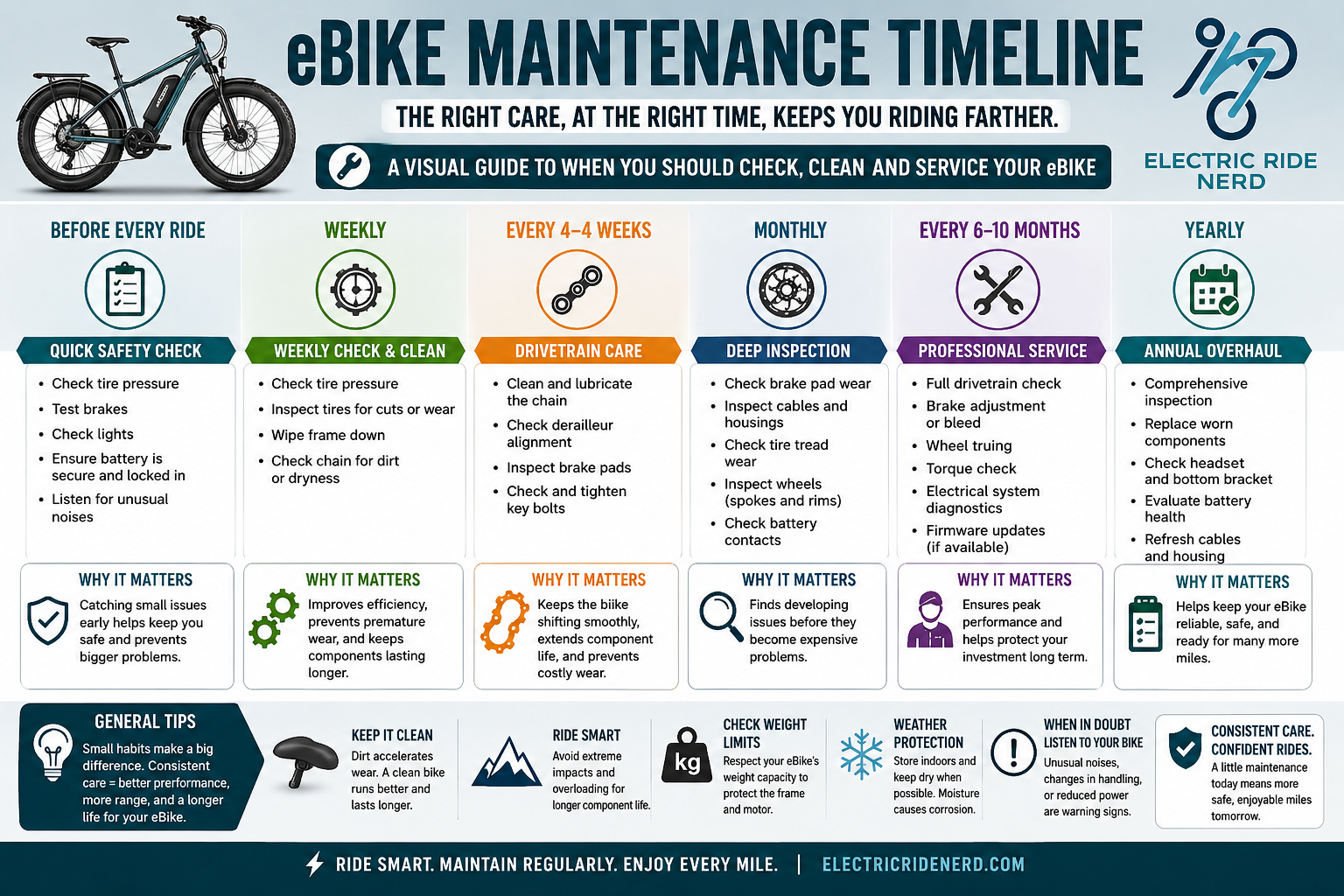
The table below provides a practical starting point for most riders.
| Maintenance Task | Recreational Rider | Frequent Rider | Daily Commuter |
|---|---|---|---|
| Quick Safety Check | Before Every Ride | Before Every Ride | Before Every Ride |
| Check Tire Pressure | Monthly | Every 2 Weeks | Weekly |
| Clean & Lubricate Chain | Every 1–2 Months | Monthly | Every 2–3 Weeks |
| Inspect Brake Pads | Every 2 Months | Monthly | Every 2 Weeks |
| Check Fasteners & Bolts | Every 2 Months | Monthly | Monthly |
| Inspect Tires for Wear | Every 2 Months | Monthly | Monthly |
| Battery & Connector Inspection | Every 3 Months | Every 2 Months | Monthly |
| Professional Service | Annually | Every 6–12 Months | Every 6 Months |
Before we go further, remember that maintenance schedules should be viewed as guidelines rather than strict rules. Riders who regularly carry cargo, ride steep hills, travel in wet conditions, or use high-powered eBikes may need to inspect certain components more frequently.
What Does eBike Service Actually Mean?
One reason service schedules can feel confusing is that riders often use the word “service” to mean different things.
Some people think service means taking their eBike to a shop for repairs. Others assume it means replacing worn parts. In reality, most service visits involve inspection, adjustment, cleaning, and preventative maintenance rather than major repairs.
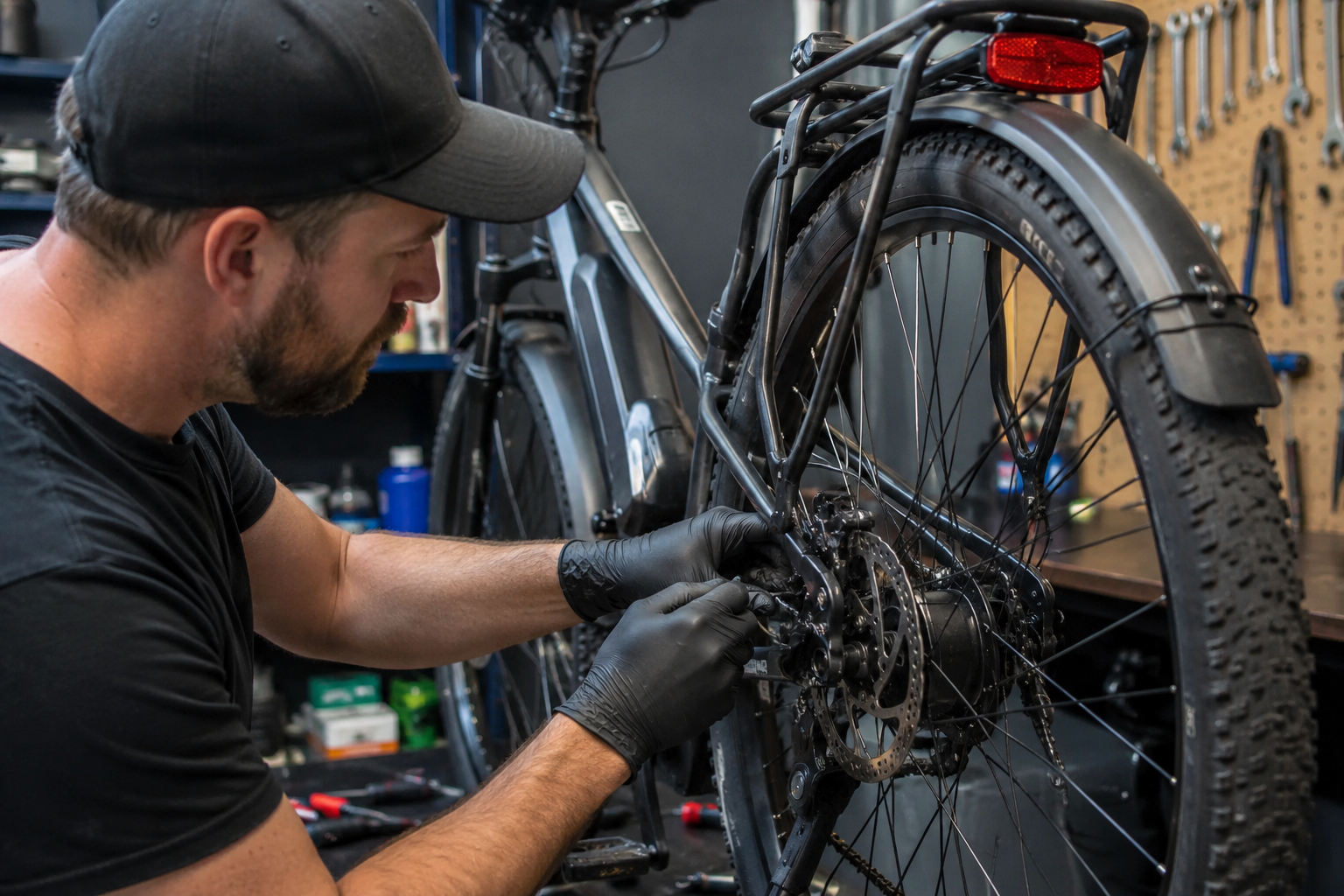
A technician may check brake wear, inspect tires, adjust shifting, verify that important bolts remain properly tightened, inspect electrical connections, and look for developing problems before they become expensive failures.
This is an important distinction because waiting until something breaks is rarely the most effective maintenance strategy. Most maintenance is designed to catch small issues while they are still inexpensive and easy to correct.
A good service schedule is less about repairing failures and more about preventing them.
Why Service Intervals Vary So Much
Many new riders expect manufacturers to provide a simple answer such as “service every six months.” In reality, eBike service intervals vary considerably depending on riding habits, terrain, weather exposure, and overall usage.
The challenge is that eBikes can live very different lives.
Consider two riders who purchase the same model on the same day. One rider uses the bike for occasional recreational rides on smooth paved paths. The other uses it five days per week for commuting through traffic, over rough roads, and in changing weather conditions.
Even though they own the same bike, their maintenance needs may look completely different after a year.
Terrain plays a role as well. Steep hills place additional demands on brakes and drivetrains. Rough surfaces increase vibration and can accelerate wear on tires, wheels, and fasteners. Frequent exposure to rain or road grime often means more cleaning and inspection.
Weight matters too. Cargo eBikes, utility bikes, and some fat tire models place greater stress on brakes, tires, and drivetrains than lighter commuter bikes.
This is why service schedules should always be viewed as a starting point rather than a universal rule.
How Riding Style Changes the Schedule
One of the easiest ways to estimate maintenance needs is to honestly evaluate how you use your eBike.
A recreational rider who enjoys occasional weekend rides may find that annual servicing is perfectly adequate. Wear develops slowly, and routine inspections are often enough to identify problems long before they become serious.
Frequent riders tend to notice that maintenance becomes more important as mileage accumulates. Riding several times per week naturally increases wear on components that experience friction and stress during normal operation.
Daily commuters often experience the greatest maintenance demands. Even relatively short commutes add up quickly over the course of a year. Frequent braking, repeated battery charging, road debris, changing weather conditions, and constant use all contribute to additional wear.
Heavy-duty riders often fall into their own category. Cargo eBikes, utility bikes, and powerful fat tire models frequently carry additional weight and place greater demands on key systems. These riders often benefit from shorter inspection intervals, even when overall mileage is similar.
The important lesson is that service schedules should reflect actual use rather than simply following a date on the calendar.
Mileage vs Time: Which Matters More?
Many riders wonder whether service should be based on mileage or time.
The reality is that both matter.
Mileage is useful because it reflects actual use. Components wear as the bike is ridden, and a rider covering thousands of miles each year will generally require more frequent maintenance than someone who rides occasionally.
Time matters because some maintenance concerns continue even when the bike is parked. Tire pressure changes, lubrication ages, electrical connections may be exposed to moisture, and storage conditions can affect components over time.
This is particularly important for seasonal riders. An eBike that spends several months in storage may still benefit from inspection before returning to regular use, even if it accumulated very little mileage during that period.
For most owners, the practical answer is to pay attention to both. If either mileage or time suggests an inspection is due, it is usually worth taking a closer look.
Why Waiting for a Problem Is Usually Too Late
One of the biggest misconceptions about maintenance is the idea that service is only necessary when something feels wrong.
Many maintenance issues develop gradually.
Brake pads wear a little at a time. Tires slowly lose tread. Drivetrain components experience wear over hundreds or thousands of miles. Bolts can loosen slightly through vibration. None of these changes usually happen overnight.
Because the changes are gradual, riders often adapt without realizing it. A brake that feels slightly weaker each month may not attract attention until performance becomes noticeably worse.
By the time many riders recognize a problem, that issue may have been developing for weeks or months.
This is why regular service schedules remain valuable even when the bike appears to be working normally. Maintenance is often most effective when it identifies issues before they affect performance, safety, or reliability.
Signs Your eBike Needs Service Sooner
While schedules provide useful guidance, your eBike may occasionally tell you that it needs attention sooner.
An unusual noise, reduced braking performance, poor shifting, unexpected vibration, or a new display error can all indicate that something deserves investigation before the next planned service interval.
Many issues are relatively minor when identified early. Ignoring them often gives those problems more time to affect other components.
If your eBike suddenly feels different, it is usually worth taking a closer look.
Common warning signs include:
- Unusual grinding, clicking, or rubbing noises
- Reduced braking performance
- Difficulty shifting gears
- Loose or unstable components
- Excessive vibration
- Display error messages
- Battery connection concerns
- Rapid changes in tire condition
A simple inspection today is often easier than a repair tomorrow.
The Parts That Usually Need Attention First
When riders think about eBike maintenance, they often focus on the battery or motor.
In reality, the components that typically require attention first are usually the parts that experience normal wear during everyday riding.
Brakes gradually wear as they convert speed into heat. Tires wear as they contact the road. Drivetrain components experience friction every time power is transferred through the bike. These systems often require attention long before the motor or battery develops a problem.
That does not mean these components require constant replacement. It simply means they deserve regular inspection because they are responsible for much of the bike’s everyday performance and safety.
Understanding which systems naturally wear over time helps explain why routine service remains important even when an eBike appears to be operating normally.
Future articles in this maintenance series will explore batteries, brakes, tires, drivetrain components, and cleaning procedures in much greater detail.
How Weather and Storage Affect Service Timing
Weather conditions can influence how often an eBike should be inspected.
Riders who regularly encounter rain, dust, road grime, or winter conditions often discover that maintenance intervals become shorter than riders operating primarily in dry environments.
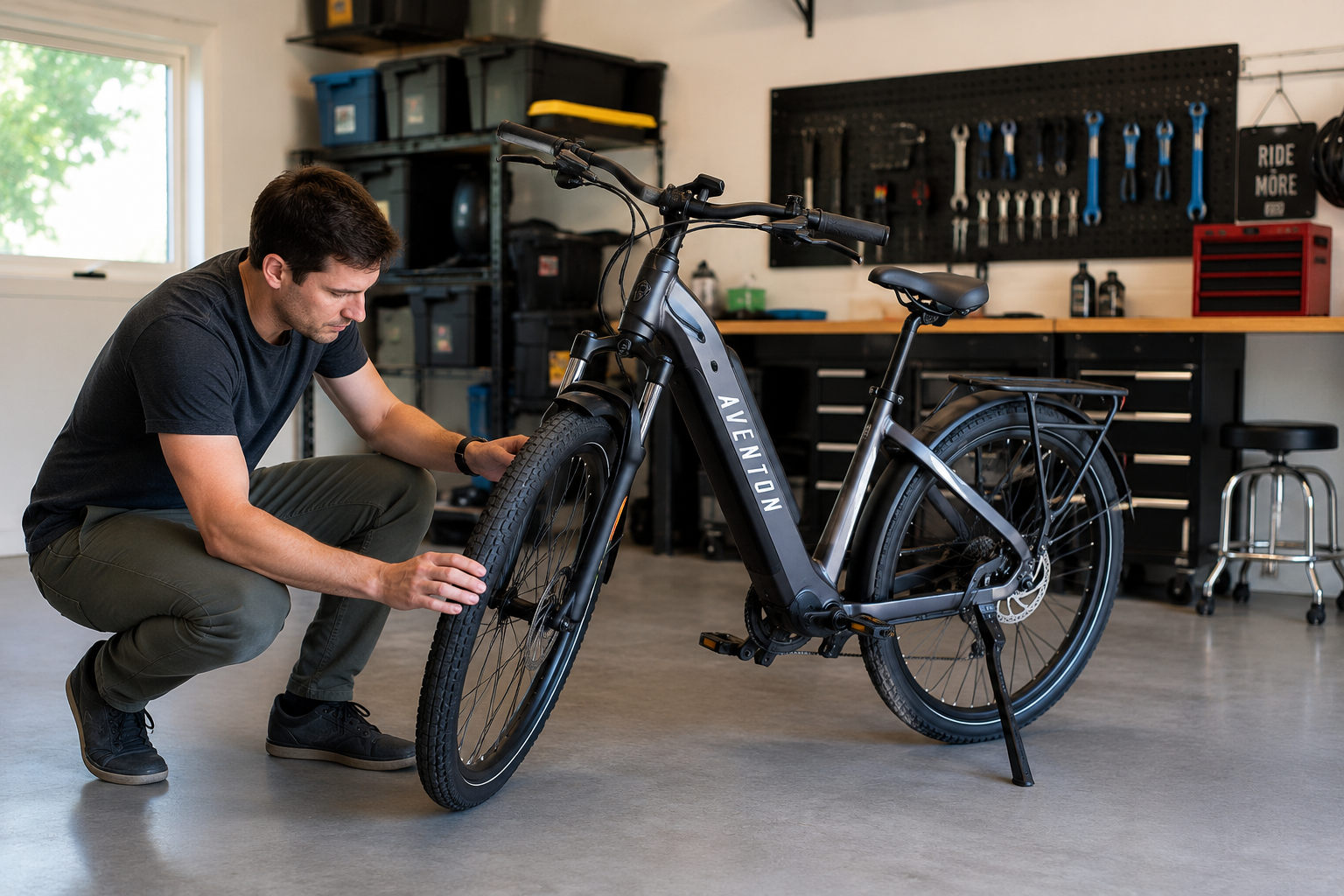
Storage conditions matter as well. A bike stored in a dry garage typically experiences less environmental stress than one exposed to frequent temperature swings, humidity, or moisture.
Seasonal transitions provide a useful reminder to perform a more thorough inspection. Many riders find it beneficial to check tire condition, braking performance, drivetrain cleanliness, and battery condition before the start of their primary riding season.
The goal is not to create unnecessary maintenance. It is simply to recognize that environmental conditions can influence how quickly wear develops.
Why Service Timing Matters
Most maintenance problems become more expensive when they are ignored for too long.
This does not mean every unusual sound requires an immediate trip to the shop. However, regular inspections make it easier to identify developing issues before they begin affecting other components.
The riders who experience the fewest major problems are often not the most mechanically skilled. They are simply the riders who pay attention to their bikes and address small concerns before they grow into larger ones.
Viewed this way, service is less about fixing broken equipment and more about maintaining reliability.
Final Thoughts
There is no perfect set of eBike service intervals that applies to every rider. The right schedule depends on how often you ride, where you ride, and the conditions your bike experiences throughout the year.
The right schedule depends on how often you ride, where you ride, the conditions you encounter, and how closely you pay attention to developing wear.
For most riders, a combination of regular inspections and professional servicing every six to twelve months provides a practical starting point.
The key is consistency. Small maintenance checks performed throughout the year are often far more effective than waiting until a problem becomes impossible to ignore.
As you continue building your maintenance routine, remember that batteries, brakes, tires, drivetrains, and cleaning schedules all have their own maintenance requirements. Understanding when service should happen is often the first step toward preventing larger problems later.
If you’re new to eBike ownership, be sure to read our complete guide to eBike and eScooter Maintenance for Beginners, where we cover the foundational maintenance habits that help keep electric rides safe, reliable, and enjoyable for the long term.
Frequently Asked Questions
How many miles can an eBike go before it needs servicing?
There is no single mileage number that applies to every eBike. Many riders use 500 to 1,500 miles as a general inspection range, but riding conditions matter just as much as mileage. A daily commuter, cargo rider, or hill rider may need service sooner than someone who rides occasionally on paved paths.
Do eBikes require more maintenance than regular bicycles?
In many cases, yes. eBikes are usually heavier and often travel farther and faster than traditional bicycles. That extra weight and speed can increase wear on brakes, tires, chains, and drivetrain parts. The motor and battery do not usually need constant service, but the regular bicycle components should be inspected consistently.
Should I follow mileage or time when scheduling eBike service?
It is best to pay attention to both. Mileage reflects how much the bike has been used, while time matters because tire pressure, lubrication, storage conditions, and moisture exposure can still affect the bike even when it is not ridden often. If either mileage or time suggests an inspection is due, it is worth checking the bike.
Can an eBike need service even if it seems to be working normally?
Yes. Many maintenance issues develop gradually. Brake pads, tires, chains, and fasteners can all wear or loosen slowly over time. The bike may still feel normal while these changes are happening, which is why regular inspections are useful even when nothing seems obviously wrong.
What is the most commonly overlooked reason riders miss service intervals?
Many riders wait until something feels wrong before checking their eBike. The problem is that wear often develops slowly, so small changes may not be obvious right away. A regular service routine helps catch those issues before they become larger repair problems.
How do I know if my eBike needs immediate service?
Your eBike may need immediate attention if you notice unusual noises, weaker braking, poor shifting, loose parts, excessive vibration, battery connection issues, display error codes, or sudden changes in how the bike feels. If something changes quickly or affects safety, inspect it before riding again.