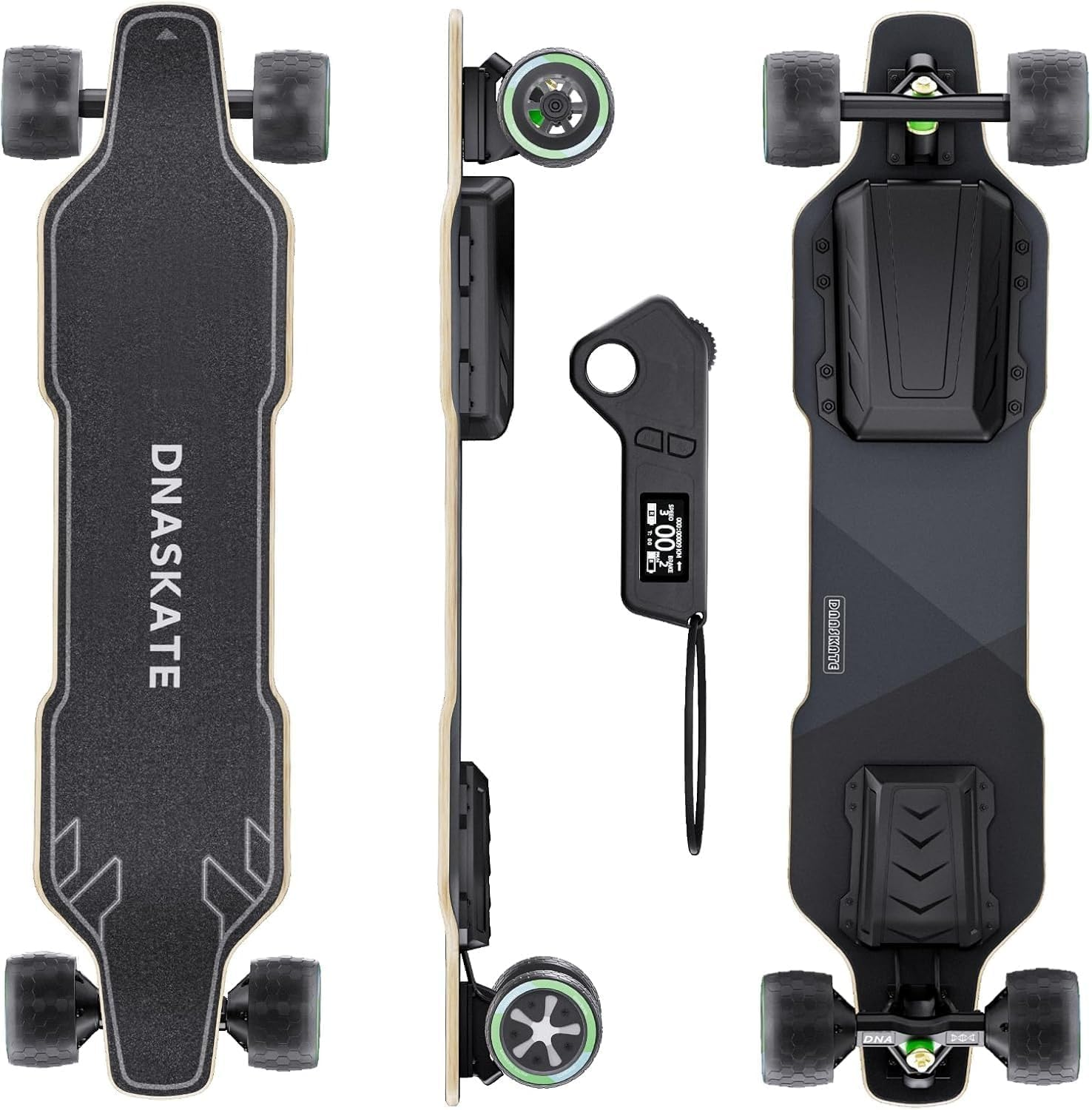
The DNASKATE V20 is the kind of electric skateboard that makes the most sense when you stop thinking only about speed and start thinking about daily use.
On paper, it has the numbers people usually look for first: a listed top speed of 28 mph, a claimed 22-mile range, dual 500W hub motors, a 288Wh battery, and a 40-inch longboard deck. Those specs put it well above the smallest entry-level boards in the DNASKATE lineup. But the real question is not whether the V20 looks better on a spec sheet. The better question is whether it makes sense as an everyday commuter board.
For the right rider, it does.
The V20 fits neatly into what Electric Ride Nerd calls the “Invisible Commute.” It is quiet, simple, and more discreet than many belt-drive electric skateboards. The dual hub motors are built into the wheels, so the board does not have the same mechanical whine that often comes from belt-driven setups. That matters if you are riding through an apartment complex, rolling into an office area, or using the board as part of a professional commute.
This is not a premium all-terrain machine. It is not the most compact board you can buy. It is also not the board I would recommend to someone who only needs a tiny last-mile ride from a train station to a classroom. The DNASKATE V20 is better understood as a budget-friendly electric longboard for riders who want more range, more stability, and more commuter confidence than a small beginner board can offer.
If you are looking for a quiet electric skateboard that can handle paved city routes without feeling like a toy, the V20 deserves a closer look.
This article contains affiliate links. If you purchase through these links, Electric Ride Nerd may earn a commission at no additional cost to you. We only recommend gear we trust and have carefully researched.
DNASKATE V20 vs. DNASKATE M2S Pro
The DNASKATE M2S Pro is useful as a reference point because it shows where the V20 sits in the same brand lineup. The M2S Pro is smaller, lighter, and more portable. The V20 is longer, more powerful, and better suited to a more serious paved commute.
This section is not meant to turn the review into a full head-to-head comparison. It simply gives the reader a practical baseline.
| Feature | DNASKATE V20 | DNASKATE M2S Pro |
|---|---|---|
| Board style | 40-inch electric longboard | Compact shortboard-style e-skateboard |
| Top speed | Up to 28 mph | Up to 22 mph |
| Listed range | Up to 22 miles | Around 9 miles |
| Battery | 288Wh / 8Ah | 115Wh |
| Motor power | Dual 500W hub motors | Dual 400W hub motors |
| Hill climbing | Around 25–30% claimed | Around 20–25% claimed |
| Wheels | 90mm PU wheels | Smaller compact-board wheel setup |
| Weight | About 18–19 lb | About 10–12.5 lb depending on listing/version |
| Best for | Longer paved commutes, quiet city riding, stable longboard feel | Short rides, campus use, last-mile trips, portability-first riders |
DNASKATE’s V20 product page lists a 28 mph top speed, 22-mile range, 288Wh battery, dual 500W hub motors, 90mm PU wheels, 4-hour charge time, 330 lb max load, and 18 lb net weight. DNASKATE’s M2S Pro listing shows a smaller board with a 22 mph top speed, around 9 miles of range, a 115Wh battery, and dual 400W hub motors. DNASKATE’s comparison page also lists the V20 with 25–30% hill climbing and places it above the M2S Pro in range, battery size, motor power, and deck size.
What this tells us:
The V20 is the better fit if the board will be ridden more than carried. It gives the rider more range, more power, and a longer platform underfoot. Those things matter when your ride is not just a quick parking-lot shortcut but part of a real commute.
The M2S Pro still has a place. It is easier to carry and easier to store. If someone only needs to ride a mile or two at a time, the smaller board may be enough. But for a rider who wants a more stable door-to-door electric skateboard, the V20 is the more serious commuter option.
Features and Specs
1. Motor & Power Delivery
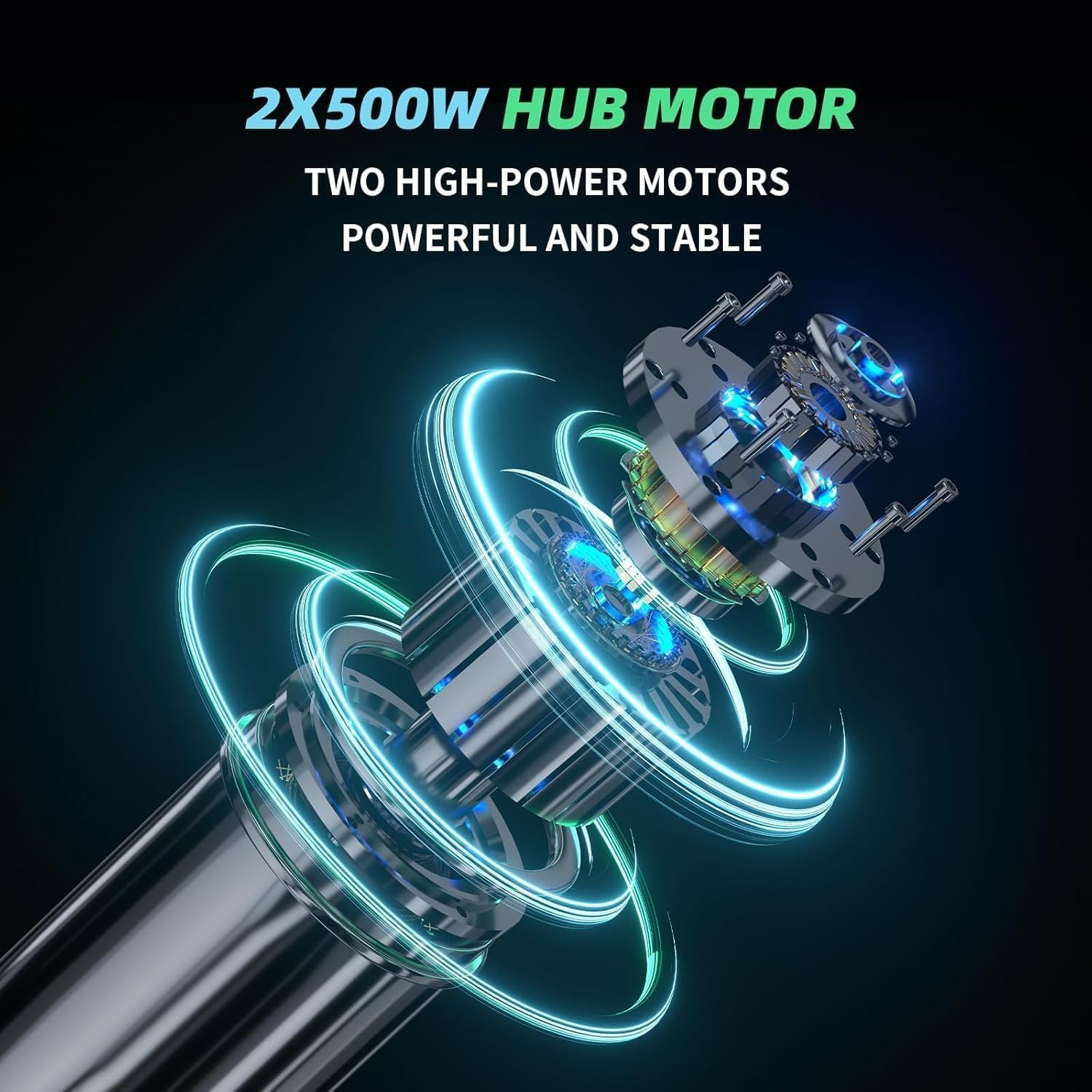
The DNASKATE V20 uses dual 500W hub motors, giving it a listed total motor output of 1000W. For a commuter board in this price range, that is a practical amount of power.
The important part is how that power fits the board’s purpose. The V20 is not trying to be a high-end performance board with aggressive belt-drive punch. Hub motors usually feel smoother and quieter. They are often less dramatic off the line, but they are easier to live with for riders who want a simple paved-road commute.
That makes sense for the “Invisible Commute” idea. A quiet board feels less disruptive in shared spaces. It does not call attention to itself in the same way a loud belt-drive board can. If your route includes apartment entrances, office campuses, bike lanes, or mixed-use paths, that quieter ride character becomes part of the board’s appeal.
The tradeoff is that hub motors usually offer less wheel flexibility and may not feel as lively as a stronger belt-drive board. Riders who want aggressive acceleration, deep carving, or a more performance-focused feel may eventually want something more advanced. But for normal city riding, the V20’s motor setup is sensible.
2. Top Speed
DNASKATE lists the V20 with a top speed of up to 28 mph. That number sounds exciting, but it needs to be treated carefully.
For most commuters, the value of a 28 mph board is not that you should ride at 28 mph every day. In real city use, that speed can be too fast for poor pavement, traffic, pedestrians, driveways, debris, and unexpected stops. A practical rider will spend much of the time below the board’s maximum speed.
The benefit is performance headroom. A board with a higher top speed often feels less strained at moderate speeds. If you are cruising at 14 to 20 mph on a safe, open, paved route, the DNASKATE V20 should feel more relaxed than a smaller board that is already close to its limit.
Newer riders should start in the lower speed modes and build confidence gradually. A 28 mph electric skateboard is not something to treat casually, even if the board itself feels smooth.
3. Battery & Range
The V20’s 288Wh battery and listed 22-mile range are two of its strongest selling points. This is where the board separates itself from smaller entry-level models.
For commuting, range is not only about the longest possible ride. It is about confidence. A board with more battery gives you more room for detours, colder weather, small hills, imperfect pavement, and stop-and-go riding. It also reduces the feeling that you need to charge after every short trip.
That said, the full 22-mile number should not be treated as a guaranteed result for every rider. Range claims are usually based on favorable conditions. Rider weight, speed, hills, wind, temperature, pavement quality, and acceleration habits all matter. A lighter rider on flat pavement at moderate speed will usually do better than a heavier rider climbing hills or riding aggressively.
The better way to view the DNASKATE V20 is this: it has enough battery to be useful for real commuting, but smart buyers should leave themselves a range buffer.
4. Climbing Ability
DNASKATE lists the V20 with a claimed hill-climbing range around 25–30% depending on the page being referenced. That sounds strong, but hill claims should always be read with caution.
A steep hill places much more load on an electric skateboard than flat riding. Rider weight, battery level, pavement condition, and speed all affect how the board climbs. A lighter rider may see better results than a heavier rider. A full battery will usually climb better than a low battery. Long hills can also feel different from short bursts up an incline.
For a rider around 180 lb, I would expect the DNASKATE V20 to handle moderate city hills better than a small entry-level board, but I would not buy it assuming every steep hill will feel effortless. It should be considered a capable paved commuter board, not a dedicated hill-climbing machine.
If your route includes long, steep climbs every day, you may want to look more closely at higher-performance boards or belt-drive options. If your route has normal city grades, overpasses, and mild hills, the V20’s dual-motor setup should be a useful upgrade over smaller boards.
5. Suspension / Ride Platform / Tire Behavior
The V20 does not have suspension in the way an electric scooter or fat-tire e-bike might. Its comfort comes from the deck, stance, wheels, and the rider’s ability to absorb road vibration.
The 40-inch longboard deck is a major part of the ride feel. A longer board gives the rider more room to stand comfortably and creates a more settled wheelbase. That helps the DNASKATE V20 feel calmer at commuting speeds than a small shortboard-style electric skateboard.
The 90mm PU wheels are also more commuter-friendly than very small wheels. They give the board a better chance over minor cracks and ordinary city pavement. But they do not turn the V20 into an all-terrain board.
This is still a street-wheel electric skateboard. Rough asphalt, gravel, wet leaves, deep cracks, potholes, and broken pavement can all create problems. The V20 is best matched with smooth streets, paved paths, bike lanes, campus roads, and predictable urban routes.
6. Braking & Safety Systems
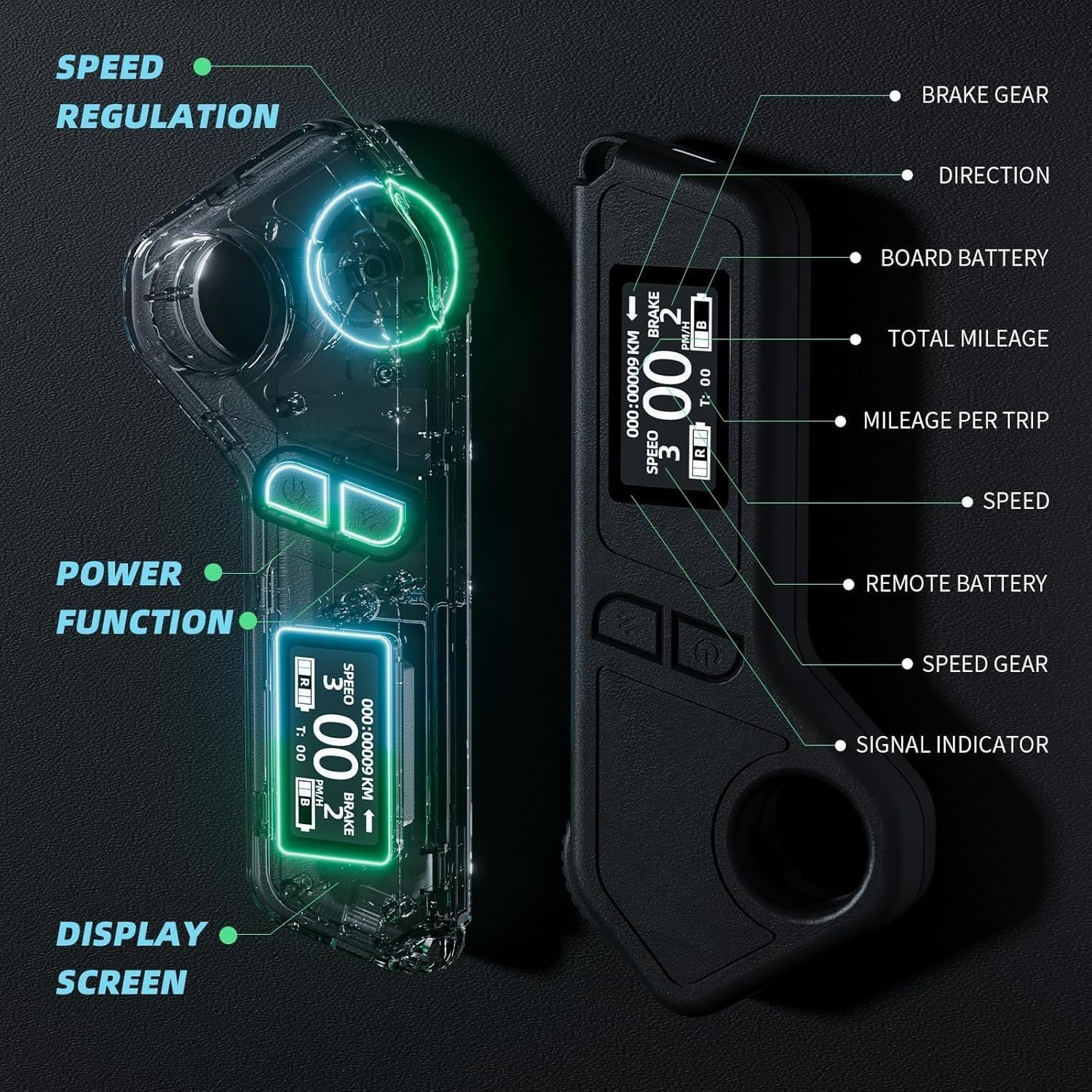
The DNASKATE V20 uses remote-controlled electric braking through its electronic speed control system. Some retail listings describe the board as having an advanced ESC system for smoother acceleration and braking, along with multiple speed modes.
For daily riding, braking predictability matters more than raw braking force. A commuter board should slow down smoothly and respond in a way the rider can learn to trust. Abrupt braking can be unsettling, especially for newer riders.
Even with electric braking, riders should not treat the board like a car or bicycle with large mechanical brakes. Electric skateboard braking depends on traction, battery state, speed, pavement, and rider balance. Safe stopping distance still matters.
Protective gear is not optional in a practical sense. A helmet should be the minimum. Wrist guards, knee pads, elbow pads, and visibility gear are also worth considering, especially for riders commuting around traffic.
7. Frame, Deck, Ergonomics, and Design
The V20’s 40-inch by 11-inch deck gives it a more comfortable longboard stance than smaller boards. That extra size is one of the main reasons the board makes sense for commuting.
A longboard platform gives the rider more room to settle their feet. That can reduce fatigue over longer rides because you are not constantly fighting a cramped stance. It also helps the board feel more planted at moderate speeds.
The downside is size. A 40-inch board is not as easy to carry through a crowded building or tuck under a small desk. At about 18–19 lb, the V20 is portable, but it is not lightweight in the way a mini board is.
This is the central tradeoff: the DNASKATE V20 gives you a better ride platform, but you pay for it with more length and more weight.
8. Smart Features / App / Ownership Technology
The DNASKATE V20 appears to keep things simple. The key ownership feature is the remote, not a deep app ecosystem. Retail descriptions reference an LCD-style remote with speed control, braking, forward/reverse control, and multiple speed modes.
For many commuter riders, that is enough. A simple remote can be better than an app-heavy experience if the basic controls are clear and reliable. Speed modes are especially useful for newer riders because they let you grow into the board instead of jumping straight into its full performance.
This is not a board I would buy for advanced app tuning, data tracking, or premium smart features. Its appeal is more basic: charge it, ride it, store it, and repeat.
9. Warranty / Certifications / Brand Support
DNASKATE’s comparison page mentions a 9-month warranty on all boards. For a budget-friendly electric skateboard, that kind of warranty is useful, but buyers should still read the warranty terms carefully before purchasing.
This is especially important if buying through Amazon or another marketplace. Check who the seller is, what the return window looks like, whether replacement parts are available, and how support is handled in the United States.
For electric skateboards, brand support matters because batteries, remotes, chargers, motor sleeves, and electronic components may need attention over time. A lower purchase price is attractive, but the ownership experience still depends on parts availability and responsive support.
Escape the Grind: The Ultimate Upgrade for Your Invisible Commute
Imagine a commute where traffic doesn’t exist and your “vehicle” fits under your desk. No more crowded trains or sweating through your suit. Instead, you’re gliding through the city in near silence, feeling the breeze at a thrilling 28 mph.
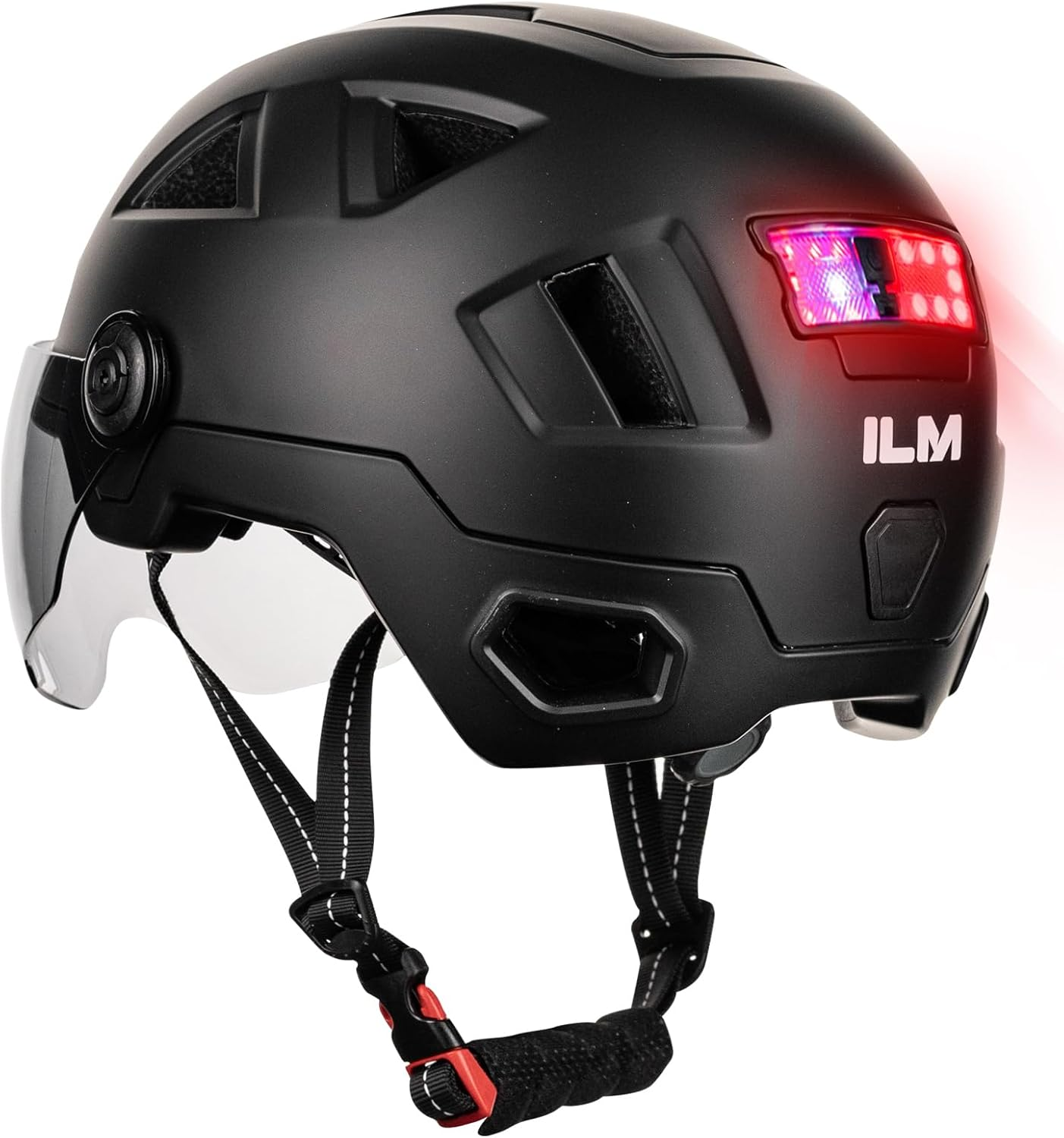
The bridge to this new reality is a high-performance setup designed for the fast lane. When you’re pushing top speeds, stability is your best friend and smart protection is your insurance. Pair your high-velocity ride with an NTA-8776 certified smart helmet—the only standard engineered to keep you safe at 28 mph. With hands-free signaling and automatic brake lights, you can focus entirely on the joy of the ride.
Arrive empowered. Stay visible. Ride protected.
Check Current Price & Availability at Amazon.
User Experience & Performance
Acceleration & Handling
The V20 should feel more confident than a smaller entry-level board because it has more motor power and a longer platform. The dual hub motors give it enough strength for normal starts, modest hills, and steady paved cruising.
The handling should feel more relaxed than a compact shortboard. That is good for commuting. You do not want every small movement to feel twitchy when you are riding to work or moving through a city route.
The longer deck also gives the rider more time to react. It will not remove the risk of speed wobbles or poor pavement, but it should feel more composed than a small board at the same speed.
Ride Comfort
Ride comfort is one of the DNASKATE V20’s better arguments. The 40-inch deck and 90mm wheels give it a smoother commuter foundation than many compact boards.
That does not mean it will float over bad pavement. It will not. Electric skateboards with urethane wheels still transfer vibration through the deck and into your feet. Over 20 to 40 minutes, rough pavement can become tiring.
The V20 is best for riders who can choose smoother routes. If your city has decent bike lanes, paved trails, and predictable streets, the board makes more sense. If your route is full of broken pavement and construction cuts, the ride may become frustrating.
Hill Climbing
The V20 has enough motor power to be more useful on hills than a small single-motor or lower-powered board. The claimed 25–30% climbing ability gives it a stronger paper profile than the M2S Pro.
In real use, I would treat that claim as an upper limit rather than an everyday expectation. Moderate hills should be manageable. Short steeper sections may be fine if the rider is not too heavy and the battery is healthy. Long, steep climbs are where a budget hub-motor board may start to feel more strained.
For a normal city commute with mild to moderate inclines, the DNASKATE V20 should be capable. For a hilly city route that demands repeated climbing, buyers should be more cautious.
Braking Confidence
The V20’s braking experience should be judged by smoothness and control, not just stopping power. Electric skateboard braking requires balance. If braking is too abrupt, it can throw off the rider. If it is too weak, it can feel unsafe.
A rider should spend time learning how the remote responds in a safe open area before commuting in traffic. This is especially true because the V20 has enough speed to get ahead of a beginner’s skill level.
The board may be quiet and commuter-friendly, but it still needs to be treated with respect.
Hidden Hurdles
The biggest hidden hurdle is not the motor or range. It is the reality of carrying and storing a 40-inch board.
At about 18–19 lb, the DNASKATE V20 is manageable for short carries, but not something most people will want to hold for long distances. If you live on the third floor with no elevator, take crowded transit, or need to carry the board through a large building every day, the weight and length will matter.
The second hidden hurdle is pavement quality. A product page can list speed, range, and motor power, but it cannot make your streets smoother. A longboard with 90mm wheels is still best on predictable pavement.
The third hurdle is weather. Like most electric skateboards, the DNASKATE V20 should not be treated as a bad-weather commuter. Wet roads reduce traction, water can threaten electronics, and slick surfaces make braking less predictable.
Daily Commuting Reality
As a daily commuter board, the V20 makes the most sense when your ride is mostly paved, your route is not too rough, and you do not need to carry the board for long stretches.
For a 3- to 8-mile commute, it has a much stronger case than a small entry-level board. The larger battery gives more breathing room. The longer deck feels more stable. The quiet hub motors help it blend into city life.
This is exactly where the V20 supports the Invisible Commute concept. It is not about showing off. It is about getting across town quietly, efficiently, and with less effort than walking or dealing with short car trips.
Portability & Storage Reality
The V20 is portable enough to bring into an office, apartment, or classroom. But it is not portability-first.
This is the point buyers should be honest about. If you mainly want a board to ride, the DNASKATE V20 makes sense. If you mainly need a board to carry, a smaller model may be better.
A compact board like the M2S Pro is easier to pick up and move around. The V20 earns its extra size by giving you a more comfortable ride platform and more range. That is a fair trade for many commuters, but it is still a trade.
Is the DNASKATE V20 Worth It?
The DNASKATE V20 is worth considering if you want a quiet electric skateboard that feels more like a real commuter board than a short-distance toy. Its value comes from the combination of a longer deck, dual hub motors, useful range, and a more stable paved-road ride.
It is not the right board for every rider. If you only need to cover a mile or two between a bus stop and a building, the V20 may be more board than you need. A smaller, lighter model will be easier to carry and store.
But if your goal is a more confident door-to-door ride, the V20 makes a stronger case. It gives you more battery, more power, and a calmer longboard feel. Those things matter when the board is part of your routine instead of a weekend novelty.
Pros
- Quiet dual hub motor setup fits city commuting well.
- 40-inch longboard deck gives the rider a more stable platform.
- Listed 22-mile range gives more breathing room than short-range beginner boards.
- Dual 500W motors offer useful power for normal paved riding.
- 90mm wheels are more commuter-friendly than very small compact-board wheels.
- Simple hub motor layout should mean less drivetrain fuss than many belt-drive boards.
Cons
- At about 18–19 lb, it is not as easy to carry as a compact mini board.
- The full 22-mile range should not be treated as guaranteed real-world range.
- PU street wheels still require smooth pavement and careful route choice.
- Hub motors are quiet and simple, but not as customizable as many belt-drive systems.
- New riders should treat the 28 mph top speed with caution.
The rider who gets the most value from the DNASKATE V20 is someone who wants a quiet, stable, paved-road commuter board and does not want to move into premium-board pricing. It makes the most sense when the board will be ridden more than carried.
If your daily route includes smooth streets, bike lanes, campus paths, or a manageable office commute, the DNASKATE V20 has the right kind of practical appeal. If your main concern is portability, the smaller M2S-style board may be smarter. If your route includes rough pavement, gravel, wet conditions, or long steep hills, you may want a more specialized electric skateboard.
Check Current Price & Availability at Amazon.
Final Verdict
The DNASKATE V20 is a practical quiet commuter board for riders who want more than a small entry-level electric skateboard but do not want to spend premium-board money.
Its strongest qualities are easy to understand: quiet hub motors, a stable longboard deck, useful listed range, and enough power for normal paved city riding. Those are the same qualities that make it a good fit for the Invisible Commute idea. It is not trying to turn every ride into a performance event. It is trying to make short urban transportation feel simple, quiet, and manageable.
The compromises are also clear. It is not especially light. It is not built for rough terrain. The real-world range will depend on conditions. And while the 28 mph top speed looks strong on paper, most riders should use that performance with restraint.
For the right buyer, those tradeoffs are reasonable. If you want a quiet electric longboard for paved commuting, campus riding, or everyday city movement, the DNASKATE V20 is a strong step up from the entry-level category.
If you enjoyed this review, you may also want to read our guide to The Invisible Commute: Why Silent Hub Motor Electric Skateboards Make Sense Today for City Professionals. That article explains why quiet hub motor boards like the V20 can be such a practical fit for modern city riders.
FAQ: DNASKATE V20 Electric Skateboard
Is the DNASKATE V20 good for commuting?
Yes, the DNASKATE V20 can be a good commuting electric skateboard for paved city routes. Its 40-inch deck, dual hub motors, and listed 22-mile range make it more practical for daily riding than many smaller entry-level boards. It is best for riders who value stability and quiet operation over maximum portability.
Is the DNASKATE V20 quiet?
Yes, the V20 should be relatively quiet because it uses hub motors instead of belt-drive motors. Hub motors are usually a good fit for riders who want a more discreet electric skateboard for city riding, shared paths, or office-area commuting.
How far can the DNASKATE V20 go on one charge?
DNASKATE lists the V20 with a range of up to 22 miles. Real-world range will depend on rider weight, speed, hills, pavement quality, temperature, and how aggressively the board is ridden. For commuting, it is better to treat the 22-mile figure as an upper estimate rather than a guaranteed daily result.
Is the DNASKATE V20 better than the M2S?
For longer commutes, yes. The V20 has more range, more power, a larger battery, and a more stable longboard-style deck. The M2S is better if portability and short-distance use matter more than range and stability.
Is the DNASKATE V20 good for beginners?
It can work for a beginner who is careful, wears protective gear, and starts in the lower speed modes. However, the listed 28 mph top speed is not beginner territory. New riders should build skill slowly and avoid treating the board’s maximum speed as a goal.
If you have enjoyed this post, perhaps you would like one of our other Posts.
Meepo V3 Series / Envy Review: The Smarter Upgrade Over Entry-Level Boards