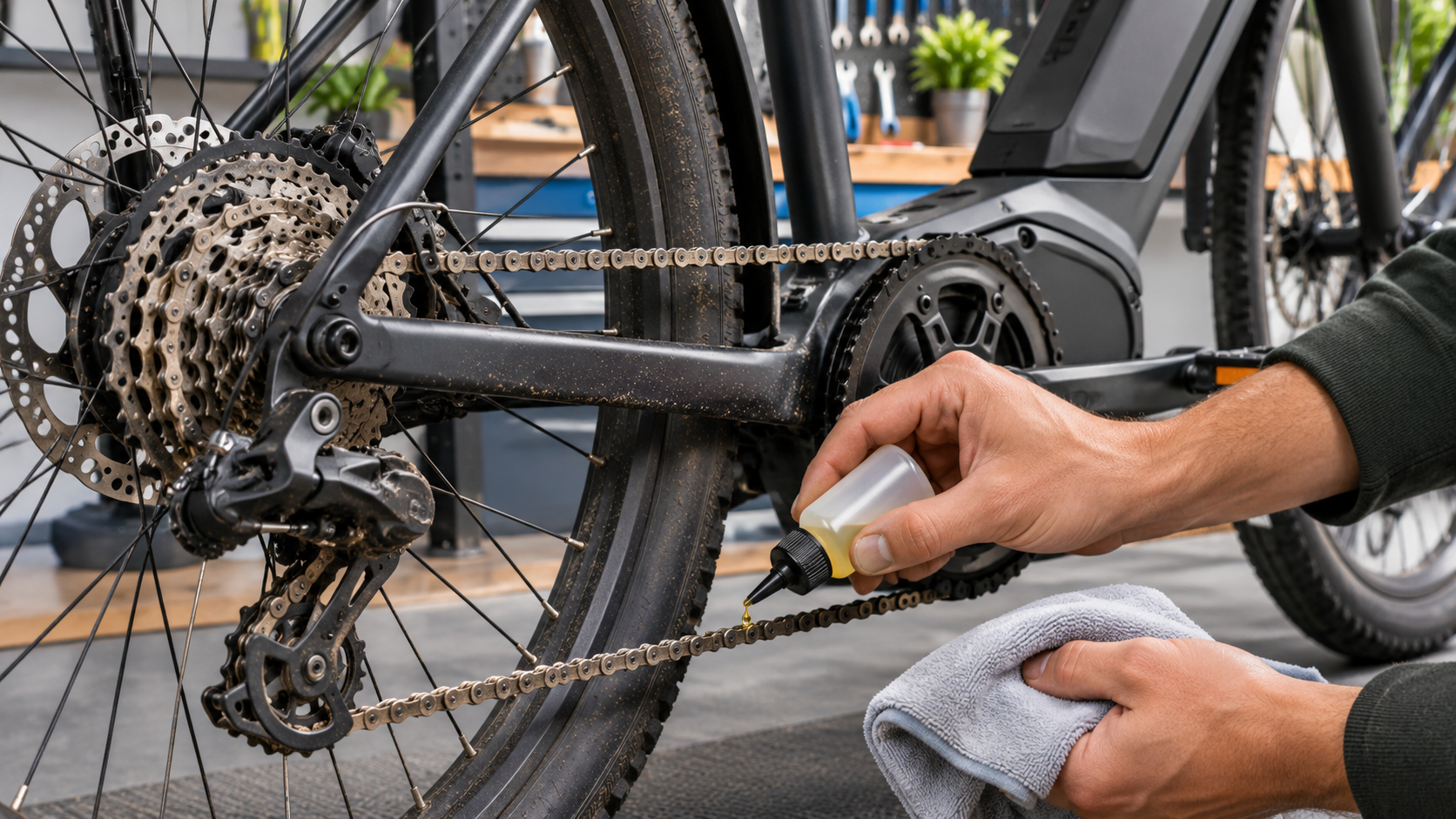
Knowing how to clean and lubricate an eBike chain properly helps it run more quietly and shift more consistently. However, cleaning too aggressively can create a different problem: lubricant is stripped from places it needs to remain, water is forced into components, or fresh oil is left on the outside where it traps grit.
This routine works for most commuter, recreational, and utility eBikes with an exposed derailleur drivetrain. Always follow the chain, lubricant, and eBike manufacturer instructions for your exact equipment.
Table of Contents
ToggleWhy eBike Chains Need Careful Cleaning
An eBike motor can place sustained torque through the chain, especially during starts, climbs, and low-cadence riding. Dirt mixed with excess lubricant becomes an abrasive paste around the rollers, pins, chainring, cassette, and derailleur pulleys. That contamination does not automatically mean the chain needs a deep degreasing. Often, a controlled surface clean and fresh lubrication are enough.
If the whole bike is dirty, follow our guide to cleaning an eBike safely before focusing on the drivetrain. Keep water, cleaner, and lubricant away from the battery contacts, electrical connectors, brake rotors, brake pads, tire tread, and display.
Gather the Right Supplies
- Two or more clean lint-free rags
- A small soft brush or dedicated drivetrain brush
- Bicycle-specific chain lubricant suited to your riding conditions
- Bicycle drivetrain cleaner or degreaser, only when needed
- Disposable gloves
- Cardboard or an absorbent mat beneath the drivetrain
Do not use automotive solvents, gasoline, harsh household cleaners, or high-pressure water. They can damage finishes, seals, adhesives, and components, and they create unnecessary safety and disposal risks.
Affiliate disclosure: This article contains affiliate links. We may earn a commission if you make a qualifying purchase through these links, at no additional cost to you. As an Amazon Associate I earn from qualifying purchases.
Choose the Cleaning Level
| Chain condition | Cleaning level | What to do |
|---|---|---|
| Light dust, faint noise | Dry wipe | Wipe thoroughly, then lubricate only if the chain sounds dry. |
| Visible road grime or old oily film | Controlled cleaner | Apply cleaner to a rag or brush, scrub gently, wipe, and dry. |
| Heavy mud or sticky black buildup | Deeper clean | Use a chain-cleaning method approved by the chain and eBike maker; inspect wear afterward. |
| Rust, stiff links, skipping, or measured wear | Inspection or service | Cleaning alone may not solve the problem; assess the chain and drivetrain. |
Step 1: Power Down and Protect the Brakes
Switch the eBike off. Remove the battery only if the manufacturer recommends removal for cleaning and you can do it without exposing contacts to moisture or dirt. Place the bike securely where it cannot tip. If you use a repair stand, clamp only a location approved by the bicycle manufacturer.
Keep all spray and drips directed away from disc rotors, pads, and calipers. Never apply degreaser or lubricant by spraying across the drivetrain. Put the product on a rag, brush, or individual chain roller instead.
Step 2: Remove Loose Dirt First
Use a dry rag to wipe the lower section of the chain, keeping your fingers and the rag clear of the chainring teeth and derailleur. On bikes where backpedalling moves the chain, slowly turn the cranks backward by hand. On mid-drive eBikes where this does not work, advance the chain using a manufacturer-approved method. Continue until the rag stops collecting loose black residue. Brush dry grit from the derailleur pulleys and chainring before adding any cleaner.
Step 3: Use Cleaner Only Where Needed
For stubborn grime, place a small amount of bicycle drivetrain cleaner on the rag or brush. Work along the chain’s outer plates and rollers without soaking the motor area or bearings. A cleaner-laden chain is not a clean chain until the loosened contamination has been wiped away.
For heavier grease and oily buildup, Finish Line Speed Degreaser Bike Cleaner is a fast-drying bicycle drivetrain cleaner that does not require water rinsing. Because it is an aerosol, use it only as directed by the manufacturer, in a well-ventilated area, and protect nearby brakes, electrical components, bearings, and other surfaces from overspray. Allow the cleaned chain to dry completely before lubricating.
Avoid prolonged soaking unless the chain manufacturer specifically allows it. The wrong solvent or an excessive bath can remove lubricant from inside the chain and leave residue behind.
Step 4: Let the Chain Dry Completely
Wipe the chain with a clean dry rag, then allow remaining moisture or cleaner to evaporate. Lubricant applied to a wet chain may not reach the roller interfaces effectively and can trap diluted grime. Do not use compressed air that could drive contamination toward bearings or electrical components.
Step 5: Apply Lubricant Sparingly
Choose a bicycle chain lubricant appropriate for wet, dry, dusty, or mixed conditions. For riders who mainly use their eBikes in dry or dusty conditions, Finish Line Dry Bike Chain Lube with Ceramic Technology is one option worth considering. Its dry-film formula is designed to reduce friction while limiting dirt buildup. Riders who regularly encounter rain or wet roads should consider a lubricant designed for those conditions instead.
Apply one small drop to each roller on the lower chain span, advancing the chain by a method appropriate for your eBike’s drivetrain. Backpedalling works on many conventional drivetrains, but some mid-drive eBikes require a different method. The target is the roller and pin interface, not a shiny coating over the side plates.
Give the lubricant the settling time stated on its label. Some products work best when applied well before riding. Follow the product instructions rather than assuming every lubricant behaves the same way.
Step 6: Wipe Off the Outside
Finish by carefully wiping the outside of the chain with a clean rag, advancing the chain using a method appropriate for your drivetrain. Keep your fingers clear of moving parts and wipe until the chain’s exterior feels nearly dry. Lubricant inside the chain helps movement; lubricant left on the outer surfaces mainly attracts dust. Check the floor, tire, rim, rotor, and caliper for any accidental drip before riding.
How Often Should You Clean and Lubricate?
There is no universal interval. Inspect the chain after wet, muddy, dusty, or salted-road rides and whenever it becomes noisy or visibly dirty. A frequent commuter may need attention every few weeks, while a fair-weather recreational rider may go longer. Our eBike service interval guide provides a broader maintenance starting point.
Do not use lubricant to disguise a mechanical problem. Skipping under load, persistent noise, stiff links, rust, or poor shifting may require wear measurement, adjustment, or professional service.
Common Mistakes That Accelerate Wear
- Adding oil over dirt: this creates an abrasive mixture instead of removing contamination.
- Using too much lubricant: excess on the outside attracts grit and can migrate.
- Failing to dry the chain: cleaner and water dilute fresh lubricant.
- Using pressure washing: force can move water and dirt into protected areas.
- Contaminating brakes: any lubricant on rotors or pads can reduce braking performance.
- Ignoring wear: a worn chain can accelerate wear on the cassette and chainring.
When to Stop and Get Help
Stop riding and seek qualified service if the chain skips, binds, drops repeatedly, shows damaged plates or pins, or if drivetrain work affects safe operation. If lubricant or cleaner reaches disc-brake friction surfaces, follow the brake manufacturer’s contamination guidance; replacing pads may be necessary. Cleaning is routine care, not a substitute for inspection.
Frequently Asked Questions
Can I use dish soap on an eBike chain?
Use products approved by the chain and eBike manufacturers. Dish soap can leave residue and may not be suitable for every finish, lubricant, or component. A bicycle-specific cleaner used in a controlled amount is the safer default.
Should I lubricate the chain after every ride?
No. Inspect it first. Lubricate when the chain is clean and dry and the existing film is no longer adequate. Adding more lubricant to a dirty chain can speed abrasive wear.
Can I use WD-40 as chain lubricant?
Use a bicycle chain lubricant intended for your riding conditions. General-purpose water-displacing sprays are not automatically suitable as the chain’s operating lubricant; check the exact product and manufacturer instructions.
How do I know whether the chain is worn out?
Use a compatible chain-wear gauge or have a bike shop measure it. Noise and dirt alone do not prove wear, and cleaning cannot restore an elongated or damaged chain.
Final Takeaway
Good eBike chain care is restrained and repeatable: remove loose grit, use cleaner only where necessary, let the chain dry, place lubricant inside the rollers, and wipe the outside clean. That routine protects the drivetrain better than frequent soaking or leaving a visible coat of oil.
Sources: Park Tool: Chain Cleaning and Lubrication; Shimano product manuals.