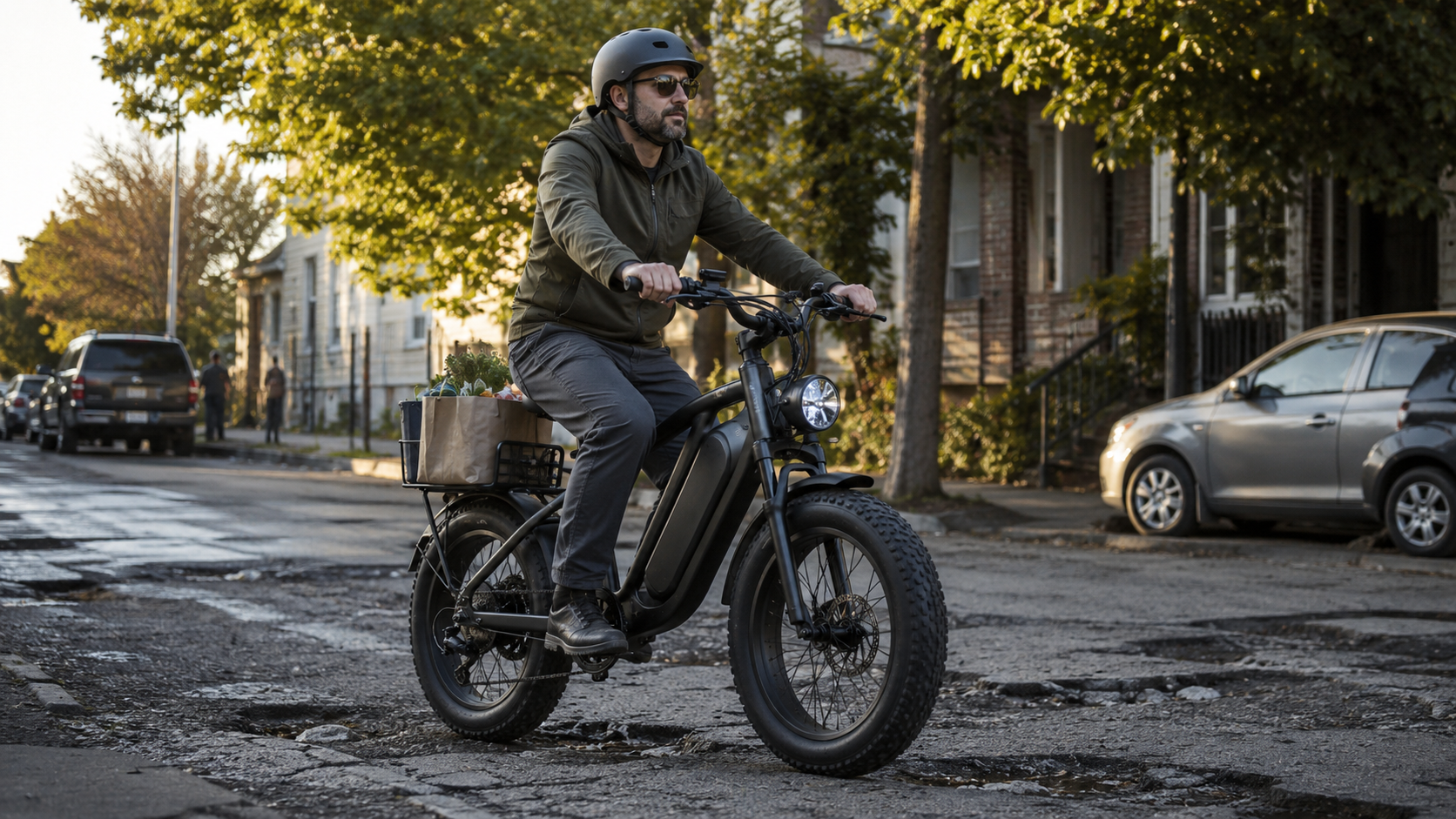
High-powered fat tire ebikes are everywhere right now.
You see them in city bike lanes, on rough suburban roads, near beaches, outside grocery stores, and on trails where riders want more grip, more comfort, and more power than a normal commuter ebike can offer.
At first glance, the appeal is obvious. These bikes look tough. They have wide tires, big frames, large batteries, and motors that promise serious pulling power. For riders dealing with potholes, hills, cargo, or rough surfaces, that sounds attractive.
But that raises the real question:
Are high-powered fat tire ebikes actually worth it, or are they just oversized ebikes with bigger numbers on the spec sheet?
The honest answer is that they can be worth it, but only for the right rider.
A high-powered fat tire ebike makes the most sense when it is bought as a practical utility machine. It should help you commute over rough roads, carry real weight, climb hills with less struggle, or replace short car trips. If you are only buying one because it looks aggressive or claims a huge motor number, you may end up with more bike than you need.
This guide looks at the real value of high-powered fat tire ebikes: torque, payload, battery size, braking, comfort, legal limits, and everyday practicality.
This article contains affiliate links. If you purchase through these links, Electric Ride Nerd may earn a commission at no additional cost to you. We only recommend gear we trust and have carefully researched.
Why Fat Tire Ebikes Are Being Treated Like the SUVs of Micromobility
The modern fat tire ebike is not really trying to be a lightweight bicycle.
It is closer to a small utility vehicle.
That does not mean it should be treated like a motorcycle. It also does not mean every rider needs one. But the “SUV ebike” comparison makes sense because these bikes are built around capability. They are designed to feel stable, handle rougher surfaces, carry more weight, and give the rider more confidence when the road is not perfect.
That matters in North America.
Many riders are not gliding along smooth, protected bike lanes every day. They are dealing with potholes, broken pavement, gravel shoulders, construction zones, wet leaves, road debris, cracked side streets, and uneven paths. A lighter commuter ebike can work well in those places, but it may not always feel forgiving.
A fat tire ebike gives the rider a wider contact patch with the ground. The larger tire volume helps smooth out harsh pavement. The heavier frame can feel planted. The motor helps offset the extra weight. The upright riding position often feels more natural for errands, commuting, and casual utility riding.
That is the promise.
The tradeoff is that these bikes are bigger, heavier, harder to store, and sometimes closer to the legal edge than buyers realize.
That is why the smart question is not simply, “How powerful is it?”
The better question is:
Does this bike solve a real problem in your riding life?
Who Actually Benefits From a High-Powered Fat Tire Ebike?
A high-powered fat tire ebike is not the best choice for every rider.
If your commute is short, flat, smooth, and easy to manage, a lighter city ebike may be better. If you need to carry your bike upstairs, a 90-pound fat tire model could become frustrating quickly.
But for some riders, this category makes a lot of sense.
The first is the Urban Survivalist. This is the commuter riding through rough city streets, potholes, construction zones, and messy bike lanes. For this rider, fat tires are not just about looks. They are a comfort and control feature. A wider tire can take some of the harshness out of broken pavement and help the bike feel more settled when the road surface changes quickly.
[Internal link opportunity: Link to your e-bike lights/night riding article here if you mention commuting safety and visibility.]
The second is the Weekend Warrior. This rider wants one bike for errands during the week and adventure on the weekend. That might mean beach rides, gravel paths, cottage roads, campground loops, hunting access roads, or light trail riding. For this rider, the motor number matters less than the full system: battery size, torque, payload, brakes, tires, and whether the bike is actually allowed where they want to ride.
The third is the Silver Cyclist. Many older riders are not looking for a narrow, twitchy, aggressive bicycle. They want something stable, upright, predictable, and confidence-building. A fat tire ebike can feel reassuring once it is moving. But the weight still matters. If the rider cannot comfortably push, store, or manage the bike when the motor is off, it may not be the right fit.
Before comparing motors, batteries, and payload ratings, it helps to know what kind of rider this category actually serves. High-powered fat tire ebikes are not for everyone, but they can make sense for three common rider types.

The Real Value Is Utility, Not Speed
The biggest mistake in this category is treating high-powered fat tire ebikes like a top-speed contest.
Speed is easy to advertise. It looks exciting in a headline. It also distracts buyers from the things that matter more in everyday use.
A true utility fat tire ebike should answer practical questions.
Can it move a heavier rider without struggling? Can it start smoothly at a green light with groceries on the rack? Can it climb a hill without forcing the rider to ghost-pedal? Can it stop safely when loaded? Can the battery finish the ride with a sensible reserve? Can you store it, charge it, and legally ride it where you live?
That is where the real value is.
A high-powered fat tire ebike is worth considering when it helps you avoid short car trips. Think about a five-mile grocery run, a commute over rough pavement, a trip to the beach with gear, or a hill-heavy route where a regular bike would stay in the garage.
If the bike helps you ride more often and drive less often, it may have real value.
If it is only powerful on paper, the value is weaker.
Torque Over Watts: Why Pulling Power Matters
Many ebike shoppers start with watts. That is understandable because motor wattage is usually one of the biggest numbers on the product page.
But watts do not tell the whole story.
For utility riding, torque is often more important. Torque is the pulling force that helps the bike get moving from a stop, climb hills, and handle extra weight. It is measured in Newton-meters, usually shown as Nm.
This matters even more on fat tire ebikes because these bikes are already heavier than most commuter models. Add a rider, battery, wide tires, racks, bags, and cargo, and the motor has a lot of work to do.
A 220-pound rider with 40 pounds of groceries on the back is asking very different things from the motor than a 150-pound rider cruising on flat pavement. On a smooth path, many motors feel fine. At the bottom of a hill, with traffic behind you and a loaded rack, weak torque becomes obvious quickly.
That does not mean every good fat tire ebike needs one magic torque number. A lighter rider in a flat city may be happy with moderate torque. But if you are buying for heavier rider support, hills, cargo, rough roads, or mixed surfaces, torque should be near the top of the checklist.
As a general guide, fat tire ebikes around 70 to 85Nm can work well for many everyday riders. Bikes in the 85 to 100Nm range often feel more capable for hills and utility use. Bikes above that may be useful for steep terrain, heavy cargo, hunting setups, or more aggressive off-road-style riding.
The point is not to chase the biggest number.
The point is to avoid buying a heavy fat tire ebike that looks powerful but feels weak when it is loaded.
Payload Is the Spec Too Many Buyers Skip
Torque gets the bike moving. Payload tells you whether the bike was built to carry the real load in the first place.
Payload capacity may be the most overlooked spec in this whole category.
If you are a heavier rider, or if you plan to carry cargo, payload should not be an afterthought. It should be one of the first numbers you check.
Payload usually means the total weight the bike is designed to carry. That includes the rider, clothing, cargo, accessories, bags, child seats, and anything mounted to the bike. A bike with a vague or low payload rating may still move, but that does not mean it is the right tool for regular utility use.
This is where the car-replacement idea becomes real.
A fat tire ebike used only for weekend cruising does not need to carry much. A fat tire ebike used for errands might carry a rider, a backpack, groceries, a lock, a rack bag, and bad-weather gear. A bike used for hunting, cottage roads, or beach trips may carry even more.
That extra weight affects everything. It affects acceleration, hill climbing, braking distance, tire wear, battery drain, and frame stress.
A good utility ebike should have a payload rating that gives the rider breathing room. If the rider weighs 230 pounds and the bike is rated for 275 pounds total, there is not much room left for cargo. If the bike is rated for 400 pounds, the conversation changes.
This does not mean every rider needs the highest payload rating available. It means the buyer should be honest about the real load.
A bike does not just need to carry you on the best day. It needs to carry you, your gear, and your normal life.
The Utility Specs That Actually Matter
If you only remember one section, make it this one.
These are the specs that separate a real utility fat tire ebike from a bike that only looks tough.
| Spec | Why It Matters | Good Starting Point | Better Utility Target |
|---|---|---|---|
| Torque | Helps the bike start, climb, and move weight | 70–85Nm | 85–100Nm+ for heavier utility use |
| Payload Capacity | Shows how much rider and cargo weight the bike is designed to handle | Around 300 lb | 400 lb+ for heavier riders or regular hauling |
| Battery Capacity | Gives a better clue than advertised range | Around 600Wh | 750Wh+ or dual battery for serious utility |
| Brakes | Heavy bikes need strong stopping power | Disc brakes | Hydraulic disc brakes preferred |
| Tire Width | Adds comfort, grip, and stability | 3 inches | 4 inches for full fat tire comfort |
| Bike Weight | Affects storage, lifting, racks, and dead-battery riding | Under 75 lb is easier | 80–100 lb is common but harder to manage |
| Electrical Safety | Matters for charging and storage | Reputable battery system | UL 2849 / UL 2271 where available |
A big motor number can look impressive, but it does not help much if the bike has a weak battery, poor brakes, vague payload rating, or no clear safety certification.
A strong utility fat tire ebike has to do four things well.
It has to move the load, carry the load, stop the load, and finish the ride.
If one of those pieces is weak, the bike may look rugged but still fail as a practical daily machine.
Battery Size Matters More Than Claimed Range
Once you know the bike can carry the weight, the next question is whether the battery can support that kind of use.
Advertised range can be useful, but it should not be taken too literally.
Many range claims are based on ideal conditions. That usually means a lighter rider, flat ground, low assist, moderate speed, no cargo, no wind, and no soft surfaces.
Real life is messier.
A high-powered fat tire ebike may be used with a heavier rider, a throttle, hills, rough pavement, cold weather, or loaded bags. All of those can reduce range. Soft surfaces like sand, snow, or loose gravel can drain a battery much faster than smooth pavement.
That is why watt-hours matter.
Watt-hours, shown as Wh, give a better sense of battery capacity. A 48V 15Ah battery has about 720Wh. A 52V 20Ah battery has about 1,040Wh. Bigger numbers do not guarantee a perfect ride, but they usually mean more usable energy.
For light errands or short commutes, a single battery may be enough. For heavier riders, long routes, hills, cargo, or frequent throttle use, a larger battery becomes more important.
Dual-battery systems make the most sense for riders trying to replace short car trips or cover longer distances without worrying about getting home.
The real question is not, “How far can the bike go in perfect conditions?”
The better question is, “How far can it go with me, my route, and my cargo?”
That is the number that matters.
The Brakes Need to Match the Weight
Power gets attention. Braking deserves just as much respect.
A high-powered fat tire ebike can weigh 80 or 90 pounds before the rider gets on it. Add a rider, groceries, tools, or weekend gear, and the total moving weight can climb quickly.
That weight has to stop.
Hydraulic disc brakes are usually preferred on heavier utility ebikes because they offer stronger and more controlled braking than many basic mechanical disc systems. Mechanical disc brakes can still work, especially on lower-cost bikes, but buyers should be careful.
If the bike is heavy, fast, and built for cargo, weak brakes are not a small compromise.
This is especially important for older riders and city commuters. A stable bike is only truly confidence-building if it stops predictably. A powerful motor does not make a bike safer if the brakes are not up to the job.
When comparing models, do not only ask how fast the bike goes.
Ask how confidently it stops when loaded.
Fat Tires Help, But They Are Not Magic
Fat tires are one of the main reasons riders like these bikes.
A wider tire can smooth out rough pavement, add grip, and make the bike feel more stable. That can be a big deal for riders dealing with potholes, gravel, dirt roads, beach paths, or uneven shoulders.
But fat tires are not magic.
They add rolling resistance. They can make the bike feel slower without motor assist. They are wider than many public bike racks are designed for. They can be more expensive to replace. They also need the right tire pressure to feel good.
Many new riders inflate fat tires too much. When the pressure is too high, the bike can feel bouncy and harsh. When the pressure is too low, it can feel sluggish or unstable in turns.
The right pressure depends on the tire, rider weight, cargo, and surface.
Once the tire pressure is dialed in, a fat tire ebike can feel much more comfortable and controlled. For the Urban Survivalist, that can mean less punishment from rough pavement. For the Silver Cyclist, it can mean a more settled ride. For the Weekend Warrior, it can help the bike adapt to different surfaces.
The tire is not just a visual feature.
It is part of the comfort and control system.
The Honest Downsides: Weight, Storage, and Daily Practicality
This is the part some product pages do not emphasize enough.
High-powered fat tire ebikes are heavy.
That weight can feel reassuring on the road. It can make the bike feel planted and solid. But the same weight becomes a problem when you need to carry the bike upstairs, lift it onto a rack, roll it through a tight hallway, or move it around a crowded garage.
If you live in a third-floor walk-up, a 90-pound fat tire ebike may be the wrong choice no matter how good the motor is.
If you need to drive to your riding location, you may need a heavy-duty ebike rack, possibly with a ramp. If you park in public, you need to think about lock weight, theft risk, and whether the wide tires fit the rack.
Storage also matters. These bikes are often long, wide, and awkward indoors. Add fenders, baskets, mirrors, racks, and bags, and they take up even more room.
The dead-battery problem is real too.
A high-powered fat tire ebike without assist is not the same as a normal bicycle. It can be pedaled, but it may feel like work very quickly. The rider is pushing a heavy frame, wide tires, and extra rolling resistance.
That does not make these bikes bad.
It means the buyer needs to be honest. A bike that is perfect on the road can still be frustrating if it does not fit your home, vehicle rack, storage area, or daily routine.
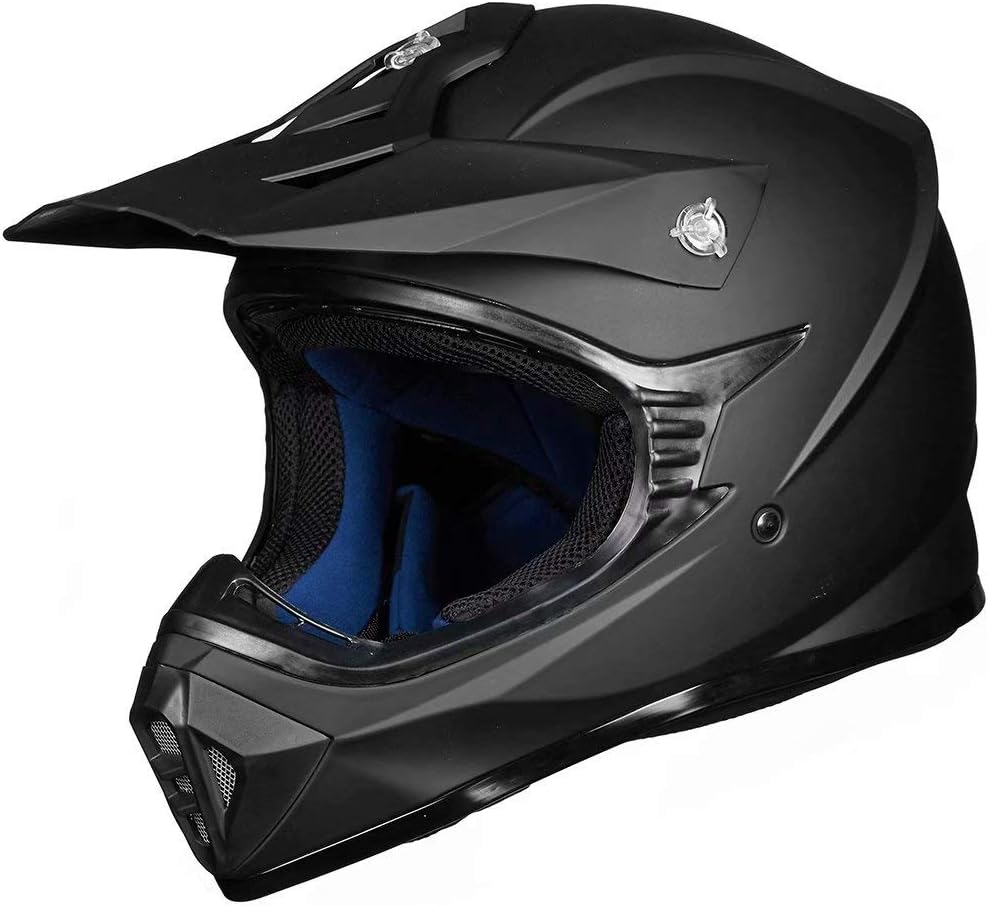
Budget Full-Face Protection for Faster Ebike Riders
The ILM Full Face Motorcycle Helmet is a budget-friendly DOT-style option for riders who want more coverage than a standard bike helmet.
Its full-face design, clear shield, ventilation, and street-bike styling make it a practical match for high-powered fat tire ebike riders using faster off-road or private-road modes.
Always confirm fit, sizing, and current certification details before buying.
Check Current Price & Availability at Amazon.
Legal Reality: Power Is Useful, But Limits Still Matter
This article is not meant to be a full legal guide, but the legal issue cannot be ignored.
The legal concern with high-powered fat tire ebikes is usually not the fat tire. It is what the motor, throttle, and speed settings allow the bike to do on public roads, bike lanes, trails, and shared paths.
In the U.S., many e-bike rules are built around the three-class system. PeopleForBikes describes Class 1, Class 2, and Class 3 electric bicycles as low-speed electric bicycles with operable pedals, motor-power limits, and assisted-speed limits. That matters because some high-powered fat tire models can be unlocked or used in modes that go beyond normal class limits.
That matters because some high-powered products can be unlocked, reprogrammed, or used in modes that go beyond normal class limits. PeopleForBikes has also warned that some higher-powered devices are being marketed in ways that blur the line between legal electric bicycles and e-motos or motor vehicles.
For the buyer, the practical takeaway is simple.
Do not buy only for the highest unlocked speed. Buy for the mode you can legally and safely use.
A bike that can reach high speeds on private land may not be legal in a bike lane, on a public path, or in a local park. Some places treat throttles differently. Some trails allow Class 1 but not Class 2 or Class 3. Some local rules are changing as cities and states react to faster micromobility devices.
[Internal link opportunity: Link to a future ERN article on U.S. and Canadian ebike laws here.]
Before buying, check your local rules and the rules for the places you actually ride. If the bike depends on an “off-road mode” to deliver the performance you want, be careful. That may be fine on private property, but it can create problems on public roads and shared paths.
This is also about being a good rider.
A heavy fat tire ebike moving fast on a crowded path can scare pedestrians and create backlash against all ebike riders. Slow down around people. Use a bell. Pass with space. Ride like access depends on your behavior, because in some places, it does.
Battery Safety: Do Not Ignore Certification
Battery safety is not the most exciting part of shopping for an ebike, but it is one of the most important.
High-powered fat tire ebikes use large lithium-ion battery packs. Those batteries can be safe when designed, tested, charged, and stored properly. But bargain systems, damaged packs, mismatched chargers, and poor-quality electronics can create serious risk.
UL 2849 is worth understanding because it looks at the e-bike electrical system as a whole, including the drivetrain, battery system, and charger system combination. That matters more as bikes become more powerful and batteries get larger.
NYC DOT also points to UL 2849 for e-bikes and UL 2271 for batteries in its e-bike battery safety programs, which is useful because New York has been one of the major North American cities dealing directly with lithium-ion micromobility safety concerns.
For buyers, the message is simple.
More power and more battery capacity make safety certification more important, not less.
[Internal link opportunity: Link to your eBike and eScooter Maintenance for Beginners article here.]
A powerful ebike should come from a brand that takes battery safety seriously. The charger should match the battery. The battery should not be modified. Damaged batteries should not be ignored. Charging should be done in a safe location, following the manufacturer’s instructions.
Saving a few hundred dollars on an unknown high-powered bike is not a bargain if the battery system is questionable.
This is one place where ElectricRideNerd should be firm: buy the power only if the safety side is also credible.
Where Extreme Dual-Motor Fat Tire Ebikes Fit
Not every high-powered fat tire ebike is in the same category.
Some are moderate utility bikes with enough power for commuting, hills, and rough roads. Others move into the extreme dual-motor category, where the bike starts to feel less like a normal commuter ebike and more like an off-road-capable electric utility machine.
That distinction matters.
A 1200W fat tire ebike may be a good fit for a rider who wants extra help on hills and rough pavement but does not need extreme power. A 6000W or 8000W dual-motor bike is a different conversation. At that level, the buyer needs to think harder about battery size, braking, frame strength, legal use, storage, and whether the bike is truly practical for daily riding.
The PUJH 6000W Dual Motor Electric Bike is a good example of the high-power category where the conversation is no longer just about commuting. A bike like that needs to be judged by whether the power is useful, controllable, and matched by the rest of the bike.
The YHAAYH 6000W Peak Dual Motor Electric Bike belongs in that same high-power discussion. The key question is whether the dual-motor setup supports real-world utility or simply adds a bigger number to the listing.
The Ekellaka 8000W Dual Motor Electric Bike pushes the category even further. That makes it an important review candidate because it helps answer a larger question: when does a powerful fat tire ebike stop being practical transportation and start becoming a machine that requires much more caution about where and how it is used?
Are High-Powered Fat Tire Ebikes Good for Heavy Riders?
They can be a very good fit for heavy riders, but only when the bike is built for the total load.
This is where payload, torque, frame design, brakes, and battery size all come together.
A heavier rider needs more support when starting from a stop and climbing hills. The motor has to work harder. The battery drains faster. The brakes have more weight to slow down. The wheels, tires, frame, seatpost, and rack all matter more than they would on a light recreational bike.
That is why a heavy rider should not shop by motor wattage alone.
A bike with a big motor number but a vague payload rating is not reassuring. A bike with a strong payload rating, good torque, hydraulic brakes, and a properly sized battery is much more convincing.
Comfort matters too. A wider saddle, upright riding position, step-through frame option, and smooth pedal assist can make the bike much easier to live with.
The best fat tire ebike for a heavy rider is not always the fastest one.
It is the one that feels stable, supported, and controlled under real weight.
Are High-Powered Fat Tire Ebikes Good for Hauling?
They can be excellent for hauling, but only if the whole bike is designed for it.
A rear rack alone does not make a bike a utility machine.
The frame needs to be rated for the load. The rack needs its own weight rating. The motor needs enough torque to start smoothly when loaded. The battery needs enough capacity to handle the extra work. The brakes need to stop the bike confidently with cargo on board.
This is why fat tire ebikes are interesting as car-replacement tools.
A good one can handle grocery runs, work gear, beach supplies, fishing equipment, hunting gear, or daily errands that would otherwise require a car. But buyers should avoid confusing “looks rugged” with “is actually rated for the job.”
A bike that is styled like a utility vehicle but lacks clear payload numbers is a question mark.
If hauling is part of the plan, the payload rating should be easy to find. The rear rack rating should be clear. The bike should feel stable at low speed. The kickstand should be strong enough to hold the bike while loading. And the brakes should feel like they belong on a loaded ebike, not a casual cruiser.
Are High-Powered Fat Tire Ebikes Good for Older Riders?
For some older riders, yes.
A fat tire ebike can feel more stable than a narrow-tire bike. The upright position can be more comfortable. Pedal assist can make hills and headwinds less discouraging. A step-through frame can make mounting and dismounting easier.
But this is also where the sales pitch needs honesty.
The bike may feel stable once moving, but the weight does not disappear. It still has to be parked, turned around, pushed, stored, and sometimes lifted. If the rider cannot manage the bike when the motor is off, it may not be the right fit.
Older riders should focus less on peak power and more on control.
Smooth pedal assist, predictable braking, a comfortable riding position, a low step-through frame, and manageable weight may matter more than extreme torque or off-road speed.
The best choice is the bike that makes the rider feel confident without creating new problems at home, in the garage, or at the bike rack.
When a High-Powered Fat Tire Ebike Is Worth It
A high-powered fat tire ebike is worth it when the bike solves a real problem in your riding life.
If your roads are rough, the tires and frame can add comfort. If you carry cargo, the payload and torque can make errands easier. If you are a heavier rider, the stronger motor system and frame rating may provide confidence. If you ride mixed surfaces on weekends, the wider tires can make the bike more useful than a narrow commuter model.
The value is strongest when the bike helps replace short car trips.
A grocery run, a commute, a beach trip, or a ride to a nearby appointment can feel much easier when the bike has enough power, battery, and stability to do the job.
That is the real win.
Not showing off the biggest motor. Not unlocking the highest speed. Not buying something that looks tough but does not fit your life.
The win is using the bike often because it makes practical sense.
When a High-Powered Fat Tire Ebike Is Not Worth It
A high-powered fat tire ebike is not worth it when the tradeoffs outweigh the benefits.
If you need to carry the bike upstairs, the weight may ruin the experience. If you ride only on smooth pavement, the fat tires may be more than you need. If you have limited storage, the size may become annoying. If you want a light, nimble bicycle feel, a heavy fat tire model may feel clumsy.
It may also be the wrong choice if the main attraction is unlocked speed. That can bring legal problems, safety problems, and trail-access problems. A bike that is fun for a few minutes but difficult to use responsibly is not a smart long-term buy.
In those cases, a lighter commuter ebike, step-through city ebike, folding ebike, or more moderate utility ebike may be a better match.
The best ebike is not the most powerful one.
It is the one you will actually use safely, legally, and comfortably.
Final Verdict: Buy the Utility, Not the Hype
High-powered fat tire ebikes are not just a passing gimmick. They are popular because they solve real problems for certain riders.
They help commuters handle rough streets. They give heavier riders and cargo-focused buyers more support. They help weekend riders cover mixed surfaces. They can give older riders a more stable and confidence-building platform. And for some households, they can replace short car trips often enough to justify the cost.
But the good ones are not defined by speed alone.
A strong utility fat tire ebike needs enough torque to move real weight, enough payload capacity to carry the rider and cargo, enough battery to finish the route, and enough braking power to stop safely.
It also needs to be practical to store, charge, park, and ride within local rules.
That is the honest broker answer.
A high-powered fat tire ebike is worth it if you need the capability and can live with the size, weight, and responsibility. It is not worth it if you are only buying the biggest numbers on the spec sheet.
Buy the bike that fits your body, your route, your cargo, your storage space, and your local laws.
That is where the real value is.
FAQs About High-Powered Fat Tire Ebikes
Are high-powered fat tire ebikes legal?
They can be, but it depends on the bike and where you ride. Tire size is usually not the legal issue. Motor rating, assisted speed, throttle behavior, and unlocked riding modes are the bigger concerns. Always check your local rules before riding on public roads, bike lanes, trails, or shared paths.
Is a 1000W fat tire ebike better than a 750W fat tire ebike?
Not always. A well-designed 750W ebike with strong torque, good brakes, and a quality battery can be more useful than a poorly designed 1000W bike. For utility riding, look at the full system, not just the motor number.
How much torque should a fat tire ebike have?
For flat casual riding, moderate torque may be enough. For heavier riders, hills, cargo, or rough roads, 85Nm or more is a better target. Around 100Nm or higher can feel more capable under load, but torque should still be considered alongside payload, brakes, battery size, and legal limits.
Are fat tire ebikes good for heavy riders?
Yes, many fat tire ebikes can work well for heavy riders. The key is choosing a bike with a strong payload rating, good torque, hydraulic brakes, a comfortable frame, and a battery sized for the rider’s real route.
Are fat tire ebikes good for older riders?
They can be. Many older riders like the stable feel, wider tires, upright position, and pedal assist. The main caution is weight. A bike that feels stable while riding can still be hard to lift, push, or store.
Do fat tire ebikes need dual batteries?
Not always. A single large battery may be enough for short commutes and errands. Dual batteries make more sense for long routes, hilly areas, heavier riders, cargo hauling, or riders trying to replace short car trips.
Are fat tire ebikes hard to pedal without power?
Yes, they can be. A heavy fat tire ebike with a dead battery is much harder to pedal than a normal bike. That is why real-world range matters and why riders should plan to finish with a battery reserve.
What is the most important spec for hauling?
Payload capacity is the first number to check. After that, look at torque, battery capacity, rear rack rating, braking power, and frame design. A good hauling ebike needs to carry the load, move the load, and stop the load safely.